India's MSMEs struggle to adopt AI despite economic importance — Product Growth, 13 July 2026
The essential morning brief for Indian product builders — every number sourced and dated, every industry covered.
13 July 2026 · Product Growth Daily Brief · Presented by Arjun & Meera · Editorial standards
🎧 Listen to this edition — Arjun & Meera, 13 July 2026
Arjun & Meera · Today's brief
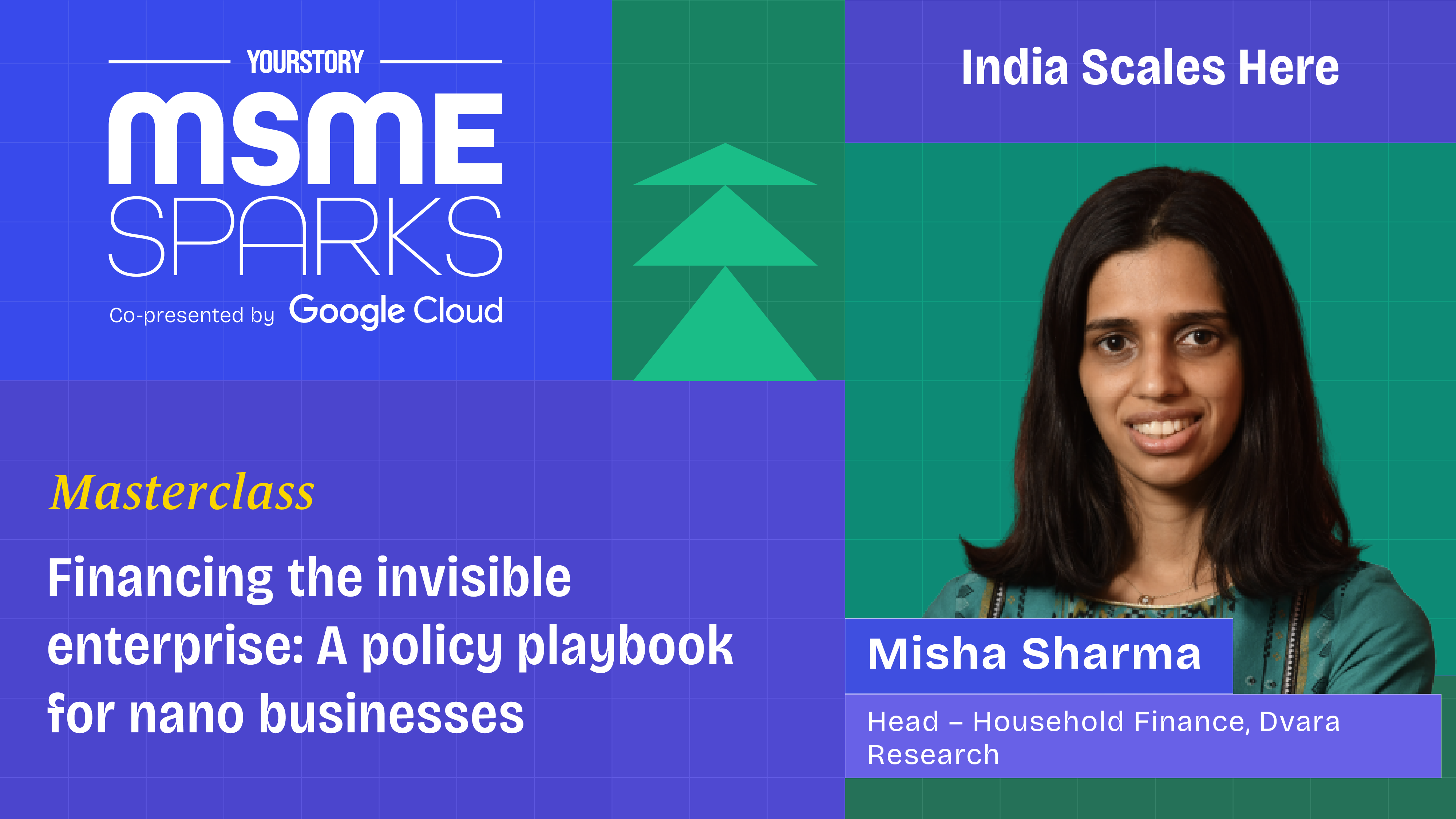
India's nano enterprises—the 6+ crore businesses earning under ₹40 lakh annually—are being locked out of formal credit not because they're risky, but because the infrastructure to assess them doesn't exist. Dvara Research's Misha Sharma laid this bare at MSME Sparks 2026: formal lenders can't price risk for businesses with zero digital footprint, irregular cash flows, or paper records. This matters to you because it's a massive product gap. The builders solving for transparent cash flow visibility, alternative credit signals, or embedded lending within B2B platforms aren't chasing small markets—they're chasing India's economic foundation.
What makes this moment unusual is that the pieces for a fix are appearing across the stack simultaneously. TCS is deploying 8,900 AI engineers and hunting acquisitions to industrialize AI tools for businesses. Fynd's Ragini Varma showed at the same MSME conference how AI can automate retail operations without hiring—meaning smaller businesses are about to get access to efficiency gains that previously required capital or headcount. Meta is bringing custom silicon (Iris chips) to production in September, signaling that compute costs will fall faster. These aren't separate trends; they're infrastructure settling into place to finally serve India's informal economy at scale.
The catch: regulation and policy shifts have to keep pace, or you'll build a perfect product into a closed door. Builders watching fintech, B2B SaaS, and retail automation all face the same headwind: formal systems weren't designed for nano enterprises. The policy conversation Sharma flagged at MSME Sparks matters as much as your architecture. PhysicsWallah and MapmyIndia's stock gains suggest investors are watching for builders who can thread this needle—product + policy awareness.
Watch this week for any movement from RBI or SIDBI on alternative credit assessment frameworks for informal businesses. If that needle moves, the TAM for fintech, B2B automation, and retail AI tools expands dramatically. If it doesn't, you're building for a market that can't legally access your solution.
At MSME Sparks 2026, Dvara Research's Misha Sharma outlined why India's nano enterprises remain locked away from formal credit. Builders should watch policy shifts that could bring millions of invisible businesses into the financial system—a massive TAM unlock for lending platforms.
TCS is building up to 8,900 forward-deployed AI engineers and actively seeking AI acquisitions to create new business opportunities. Builders: India's largest IT services firm is signaling demand for AI vertical stacks—acquire or partner early, before consolidation accelerates.
Fynd's Ragini Varma explained how AI can automate retail operations, improve efficiency, and unlock growth without hiring at MSME Sparks 2026. Builders: this is the TAM—99% of MSMEs haven't moved on AI yet. Build point solutions for inventory, staffing, and pricing that work offline-first.
PhysicsWallah and MapmyIndia saw stock gains while Ola Electric and Pine Labs slipped, reflecting mixed investor sentiment on new-age tech. Builders in edtech: the market is rewarding unit economics and retention, not CAC-first growth. If you're public or planning it, focus your narrative on path to profitability.
OpenAI launched a 'super app' emphasizing cheaper and broader availability than Anthropic competitors. Builders integrating AI: OpenAI is positioning for consumer distribution, not just B2B APIs. Watch for bundled pricing models and native integrations—the platform wars are shifting from LLM to experience layer.
Meta's four-generation MTIA project enters production with 'Iris' in September, targeting custom silicon to improve AI inference. Builders: vertical integration of chip design is now table stakes for AI-scale companies. If you're in compute, focus on domain-specific accelerators, not general-purpose silicon.
 Arjun’s TLDR
 Meera’s TLDR