NPCI's Unified Agent Protocol Unlocks AI-Powered UPI Transactions for Builders — Product Growth, 14 July 2026
The essential morning brief for Indian product builders — every number sourced and dated, every industry covered.
14 July 2026 · Product Growth Daily Brief · Presented by Arjun & Meera · Editorial standards
🎧 Listen to this edition — Arjun & Meera, 14 July 2026
Arjun & Meera · Today's brief
India's fintech infrastructure just got its biggest unlocking signal yet. NPCI is building a Unified Agent Protocol—a national standard for AI agents to verify, register, and execute UPI transactions autonomously. This isn't theoretical. It means by late 2026, an AI agent could settle vendor payments, reconcile invoices, or process refunds without human sign-off. For any builder running B2B SaaS, supply chain, or lending products in India, this is the moment your automation assumptions shift. The protocol becomes real infrastructure, not a feature request.
The timing matters because three simultaneous pressures are reshaping what builders can actually afford to charge. Global SaaS pricing inflation hit 8.7% year-over-year—nearly 5x G7 rates—and half of software companies are already repricing. Indian B2B founders watching vendor costs squeeze margins now have 12–18 months to own the AI-native automation layer before pricing locks in. OpenAI's release of GPT-5.6 models (Sol, Terra, Luna tiers) plus ChatGPT Work—an agent that autonomously gathers context across tools—signals the supply side is moving fast. The UAP + agentic AI combo means builders who embed autonomous payment and workflow orchestration now avoid being commoditized later.
Regulation is threading tighter, but not blocking. The CCI cleared upGrad's Unacademy acquisition, IRDAI is shifting insurance commissions from upfront to lifetime structures (killing short-term mis-selling incentives), and the Supreme Court upheld 28% GST on gaming bets across the full face value. None of these kills the game. They all filter for durability. Meanwhile, the deeptech backbone is hardening: CG Semi's OSAT plant went live in Sanand, and ISM 2.0's ₹1.25 lakh crore is awaiting cabinet sign-off. If you're building for India's next decade, this regulatory clarity + manufacturing reality means the moat just got harder to fake.
Watch this week: How upGrad integrates Unacademy's user base into its AI-agent workflow offering. That integration speed will telegraph whether agentic tools are just hype or the actual new unit of product velocity in India.
NPCI is developing a Unified Agent Protocol (UAP) — in consultation with industry, per Business Standard (8 Jul 2026) — to register, verify, and authorise AI agents to make payments autonomously over UPI, building on UPI Circle's delegated-payments model; the protocol requires RBI approval before launch, and major payment players have chosen to back NPCI's standard rather than build a rival one. Builders shipping agentic commerce, AI assistants, or merchant apps need to track UAP's draft specs closely, because the trust-and-authorisation layer NPCI designs will define what your agent can spend, on whose behalf, and what recourse exists when it goes wrong.
OpenAI released GPT-5.6 — a three-tier model family (Sol, Terra, Luna) — on July 9, 2026, alongside ChatGPT Work, an agent that autonomously gathers context across Slack, Notion, Microsoft 365, and Google Drive to produce finished documents, spreadsheets, and presentations; per TechCrunch (Jul 9), API pricing starts at $1 input / $6 output per million tokens for Luna, rising to $5 input / $30 output for Sol. Indian builders shipping on the OpenAI API now have a meaningfully cheaper tier (Terra at $2.50/$15, roughly half the cost of GPT-5.5) for production workloads, and ChatGPT Work's multi-hour autonomous task loop is the clearest signal yet that agentic orchestration — not chat — is where enterprise budget will land in FY27.
Global SaaS pricing is up approximately 8.7% year-over-year in 2025 — nearly 5x the G7 average inflation rate of 2.7% — with 50% of software companies preparing further price hikes and discount rollbacks, per Saastr's 2025 analysis. Indian builders selling to enterprise customers who themselves face rising SaaS costs have a narrow window to reprice their own products upward before buyers go into blanket-vendor-consolidation mode — price increases are now industry-normalised, and waiting means leaving margin on the table.
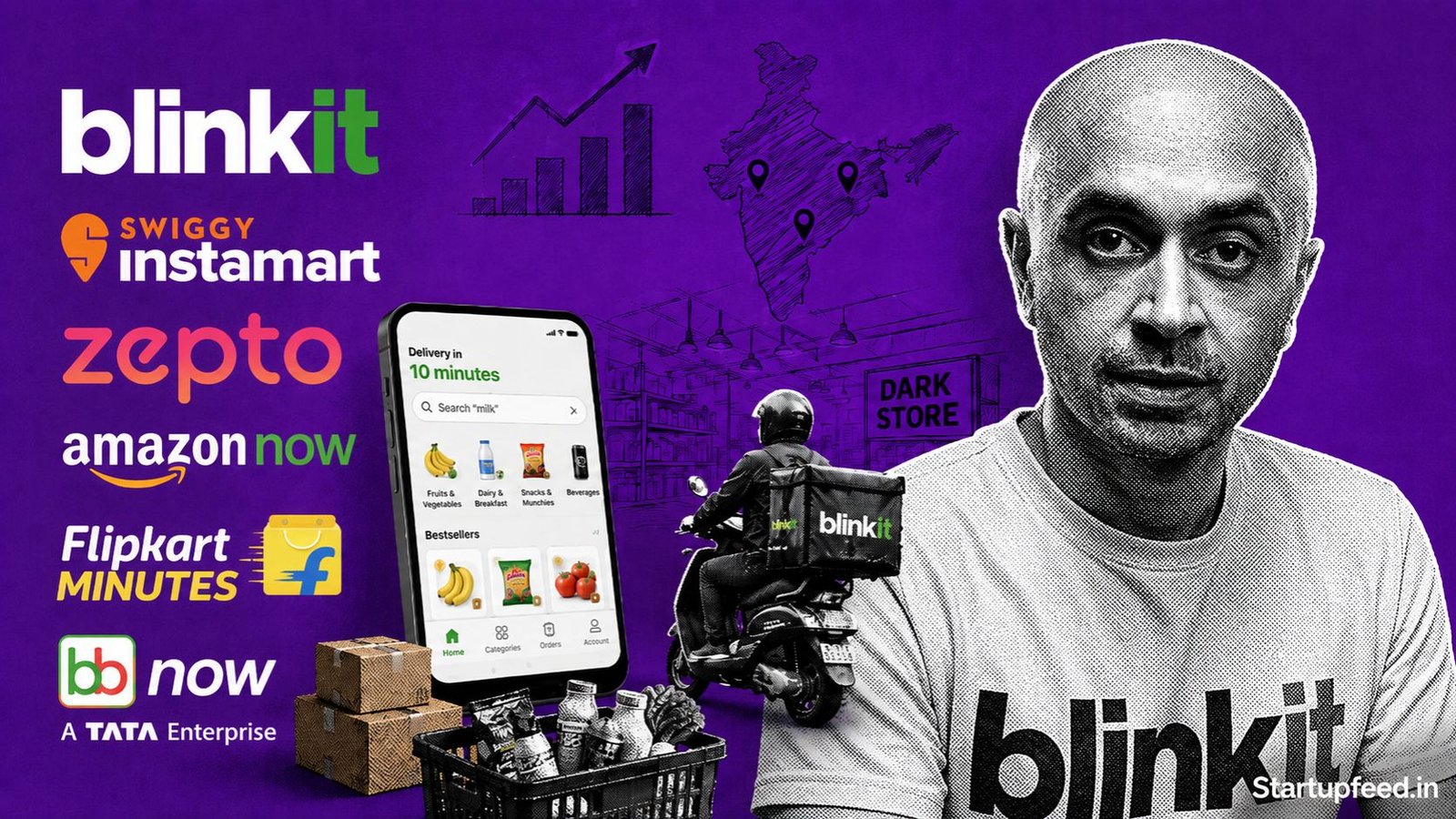
Flipkart Minutes is adding roughly 100 dark stores every month in 2026, putting it on track for 1,200 stores by June, broadly matching Zepto and Swiggy Instamart in physical scale, per TechCrunch and Bernstein notes cited by StartupFeed (June 2026); simultaneously, Amazon India has committed ₹2,800 Cr (~$300 Mn) to Amazon Now dark-store expansion this year, per the same source. For D2C brands, this means two more deep-pocketed platforms — each with cross-sell advantages over pure-play quick-commerce — are competing for dark-store shelf placements, so brands that haven't begun Amazon Now or Flipkart Minutes onboarding conversations are already behind the curve on the fastest-growing discovery channel.
The Competition Commission of India approved upGrad's acquisition of Unacademy parent Sorting Hat Technologies in a meeting on 7 July 2026, clearing the key regulatory hurdle for an all-stock deal that values Unacademy at roughly ₹2,055 crore ($218 mn) — a reported 90% discount to its 2021 peak of $3.4 bn, per Inc42 (7 Jul). A combined upGrad–Unacademy entity spanning test prep (UPSC, JEE, NEET, GATE), higher education, and professional upskilling creates a platform gap: mid-market vernacular and Tier-2 test-prep builders should move fast before the merged entity rationalises pricing and locks distribution.
India is building a proposed Unified Agent Protocol (UAP) — a national infrastructure standard that would let AI agents make UPI payments autonomously after verifying their legitimacy, authority limits, and accountability chain, per Business Standard (8 Jul 2026); UPI processed 22.71 billion transactions in June 2026 with ₹28.92 trillion in value, per NPCI data cited by Vision IAS (9 Jul). If UAP ships, every consumer app with a checkout or subscription flow must register and authorise its AI agent inside the protocol — builders should map their agentic use-cases now and watch for the NPCI consultation paper to secure early-mover positioning in the trust registry.
India's Ministry of Health and Family Welfare, backed by the National Health Authority and the National EHR Standards Resource Centre (NRCeS), launched the Bharat Health Terminology Service on 2 July 2026 — a FHIR-compliant API providing standardised healthcare terminology, code systems, and value sets for use across all digital health systems (Healthcare IT News, 2 Jul). Any healthtech product storing or exchanging clinical records now has a government-mandated vocabulary layer to align to, meaning teams that hard-code proprietary code systems today will face costly retrofits when payers and public hospitals enforce the standard.
IRDAI is preparing a draft framework — expected within four to six weeks per sources cited by Business Recorder (3 Jul 2026) — that would replace large upfront distributor commissions, which can reach 40% of premiums on some life and health products, with payouts spread across the policy lifetime, and would also link commissions to effort metrics such as advisory service, paperwork support, and claims handling. Builders running B2B2C distribution stacks, bancassurance APIs, or POSP-enablement platforms need to model how trail-based commissions change their revenue recognition, partner incentives, and product-mix strategy before the consultation paper drops by July end.
PM Modi inaugurated CG Semi's OSAT facility in Sanand, Gujarat on July 4, 2026 — a ₹7,600 crore plant (CG Power JV with Japan's Renesas and Thailand's Stars Microelectronics) that will produce advanced FC-BGA and FC-CSP chips for automotive, 5G and industrial customers, making it India's third operational chip packaging unit after Micron (Feb 2026) and Kaynes Semicon (Mar 2026), per the India Semiconductor Mission website; separately, the Expenditure Finance Committee has cleared ISM 2.0 at ₹1.25 lakh crore (US$13.21 billion, IBEF, ~Jul 2026), a 64% jump over ISM 1.0's ₹76,000 crore, now awaiting Cabinet approval. For builders, Sanand's three-plant OSAT cluster means domestic chip testing and packaging slots exist today — fabless design startups building for automotive or 5G should begin qualifying their tape-outs against these facilities now, before ISM 2.0 demand floods the queue.
Tata Motors launched the electric Sierra SUV on July 1, 2026, at an introductory price of ₹18.79–24.79 lakh (Business Standard, 1 Jul 2026); CEO Shailesh Chandra said the West Asia conflict has shifted the Indian EV market from 'a push mode to a pull mode,' and projected passenger-vehicle EV penetration at 7–8% in FY27, crossing 10% in FY28. Builders in EV software, fleet-tech, or charging should note that Harrier EV demand is already nearly double current production capacity — supply-constrained hits on popular models are opening lanes for third-party range-anxiety and fleet-management SaaS that can convert waitlist anxiety into retained customers.
A bench of Justices J.B. Pardiwala and R. Mahadevan ruled on 28 May 2026 that 28% GST on the full face value of deposits — not just gross gaming revenue — applies retrospectively to RMG platforms, restoring a ₹21,000 crore demand against Gameskraft and upholding state governments' right to ban online money games, per Business Standard (28 May 2026); in a companion ruling the court confirmed that the skill-vs-chance distinction is legally irrelevant once real money enters the equation. Any founder building a product that touches deposits, contest entries, or prize pools must treat this ruling as a hard cap on business viability: the effective tax burden on a typical 10% platform-fee model is now close to 15× its pre-2023 level, and show-cause notices reportedly extend personal liability to directors and founders.
On July 2, 2026, the RBI testified before the Lok Sabha's Standing Committee on Finance on Virtual Digital Assets (study item No. 3141, Lok Sabha Bulletin Part II, 14 Aug 2025) — the central bank's first direct appearance on crypto before Parliament, despite the committee having already heard from CoinDCX, Coinbase, CoinSwitch, WazirX, Binance, FIU-IND, CBDT, IFSCA, and the Ministry of Corporate Affairs across seven prior sittings; Committee Chairman Mahtab had already publicly acknowledged after the 7th sitting on May 20 that the RBI remains opposed to any regulation or permission for VDAs in India (The Crypto Times, 26 Jun 2026). Any builder structuring a product around a future licensing framework must treat this as the definitive signal that cross-border crypto flows, stablecoin on-ramps, and fiat-crypto rails face an active RBI veto — design your compliance stack to survive in the regulatory gap, not around an imminent green light.
 Arjun’s TLDR
 Meera’s TLDR