EV retail sales surge to record 3.27 lakh units in July — Product Growth, 8 August
The essential morning brief for Indian product builders — every number sourced and dated, every industry covered.
8 August 2026 · Product Growth Daily Brief · Presented by Arjun & Meera · Editorial standards
🎧 Listen to this edition — Arjun & Meera, 8 August 2026
Arjun & Meera · Today's brief
The credit card market just became a zero-sum war, and that matters because it signals how Indian fintech will compete for the next decade. HDFC Bank's 22% share feels untouchable until you see SBI Card chasing hard at 19%—a gap that's narrowing precisely when digital payments are exploding. SBI Chairman Setty's push for supremacy isn't nostalgia; it's a blueprint: in a mature payments layer, the real margin lives upstream in credit products. This reshuffles how builders should think about unit economics. If incumbents are consolidating card volumes to improve persistency and move upmarket (see: LIC cutting low-productivity agents to focus on premium policies), the arbitrage for fintech isn't in competing on breadth anymore. It's in finding the segments they're abandoning.
The EV two-wheeler surge—88% growth to 2L+ units in July alone—shows where Indian consumers have already decided the future lives. That's not startup hype; that's retail velocity. But watch what happens when you layer this against fintech credit dynamics: as EV ownership democratizes, the lending, insurance, and aftermarket services bundled to those vehicles become the real product. A builder betting on EV adoption without a fintech angle is leaving money on the table.
Globally, the regulatory winds are shifting hard. The New Mexico court ordering Meta to pay $567 million for youth mental health harm isn't just litigation—it's a signal that consumer trust, especially around young users, now has a price tag that moves boards. Meanwhile, the EU's €20 billion gigafactory bet shows governments racing to own infrastructure, not just regulate it. For Indian builders, especially in deeptech and healthtech, this means the next wave of capital flows toward founders who can navigate both commercial velocity and regulatory clarity. Klassroom's IPO debut 5% above issue price and AGS Health's $3 billion valuation show that edtech and healthtech still command investor appetite—but only when unit economics and path to profitability are credible.
Watch what SBI Card announces this week on agent productivity and digital-first strategies. That's where you'll see the real playbook for how Indian financial services competes in a crowded market.
HDFC Bank leads with 22% of active credit cards and 29.5% of monthly spends, while SBI Card holds 19% and 20.4% respectively, per ET BFSI. SBI Chairman Setty told ET BFSI the bank is pivoting to the #1 spot—watch for aggressive product launches and incentive wars to intensify.
The European Commission scaled up its gigafactory plan from five to seven sites, aiming to attract at least €20 billion in private investment alongside public backing, per The Hindu Tech. Builders should watch for geopolitical fragmentation in AI inference—Europe's localisation move will create regional models and restrict cross-border training data flows.
LIC is reducing its low-productivity agent base while focusing on higher-ticket policies to improve persistency and profitable growth, per ET BFSI. Builders in insurance tech should watch the agent-tech split: LIC's move signals a shift toward digital-first, higher-margin segments—API plays for underwriting, claims, and distribution will consolidate around premium workflows.
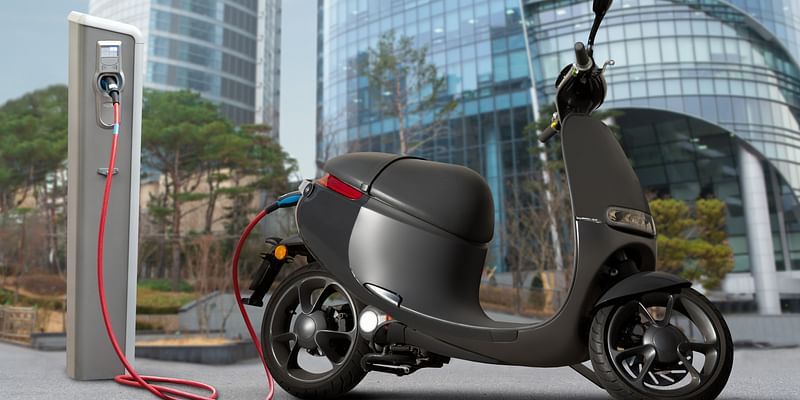
Two-wheeler EV sales jumped 88.32% year-on-year to 2,04,362 units in July, driving total EV retail sales to a record 3.27 lakh units, per FADA via YourStory. The two-wheeler segment's momentum is creating logistics and last-mile opportunities—builders in EV ecosystem infrastructure should target the supply chain layer before charging becomes the default.
Fusion Klassroom Edutech closed its maiden trading session at ₹166.75, a 5% premium to issue price, per Inc42. Edtech IPO sentiment remains positive—Klassroom's listing validates the inventory-light, high-margin model. Builders should watch: margins and unit economics matter more than scale in public markets now.
A Santa Fe court ruled Meta created a public nuisance and ordered it to pay $567 million into a New Mexico fund for teen mental health prevention and treatment, with additional youth safety measures, per ET Tech. The verdict treats algorithmic design as a liability vector—builders in social, content, or discovery platforms should expect product liability frameworks to tighten. Engagement maximisation metrics are now regulatory risk.
AGS Health updated its SEBI IPO filing after confidential submission in April, with proposed valuation around $3 billion, per ET HealthWorld. Healthcare tech exits are accelerating—the $500M IPO threshold signals institutional capital is ready to back scaled healthtech operators.
After 20+ years building space payloads, testing infrastructure and electronic assemblies, Optimized has begun manufacturing satellites with firm orders and expected deliveries soon, per ET Tech. India's space tech is shifting from subsystems to platforms—builders should expect government mission-critical demands to accelerate hardware startups with reliable supply chains and provenance.
Ola Electric trimmed its net loss by 22% year-on-year to Rs 336 crore in Q1 FY27, though revenue from operations fell 45% to Rs 455 crore, per ET Tech. The loss narrowing is masking a demand cliff—builders in EV support services should read this as a supply chain stress signal, not a growth story. Watch for consolidation in the EV supply chain.
Nazara Technologies announced a preferential share issue to fund growth, per ET Tech. Gaming exits and secondary capital remain resilient—builders in gaming, esports and interactive entertainment should watch for consolidation around profitable titles and platforms over greenfield user acquisition.
 Arjun’s TLDR
 Meera’s TLDR