AI Adoption Shifts Focus From Implementation to Enterprise Value Creation — Product Growth, 10 August
The essential morning brief for Indian product builders — every number sourced and dated, every industry covered.
10 August 2026 · Product Growth Daily Brief · Presented by Arjun & Meera · Editorial standards
🎧 Listen to this edition — Arjun & Meera, 10 August 2026
Arjun & Meera · Today's brief
The RBI just rewrote the playbook on how much leverage Indian banks can carry, and this matters because it's not just regulatory theater—it's a signal that India's financial system is getting serious about global alignment while carving out room for domestic growth. The overhaul tightens capital requirements in ways that will reshape lending behavior, which means fintechs building on top of banking infrastructure need to watch how their lender partners adjust pricing and risk appetites over the next quarter.
The real story threading through today's pile, though, is that companies have stopped asking "how do we deploy AI" and started asking "how do we redesign everything around it." Thirty-two percent of entities surveyed expect AI to drive reskilling rather than mass layoffs, which tracks with what SaaS builders are seeing on the ground—workflows are being reimagined, roles are shifting, but the talent is being redeployed. This isn't 2023 anymore. The conversation has moved from adoption to enterprise value creation, and that's where the real product leverage lives.
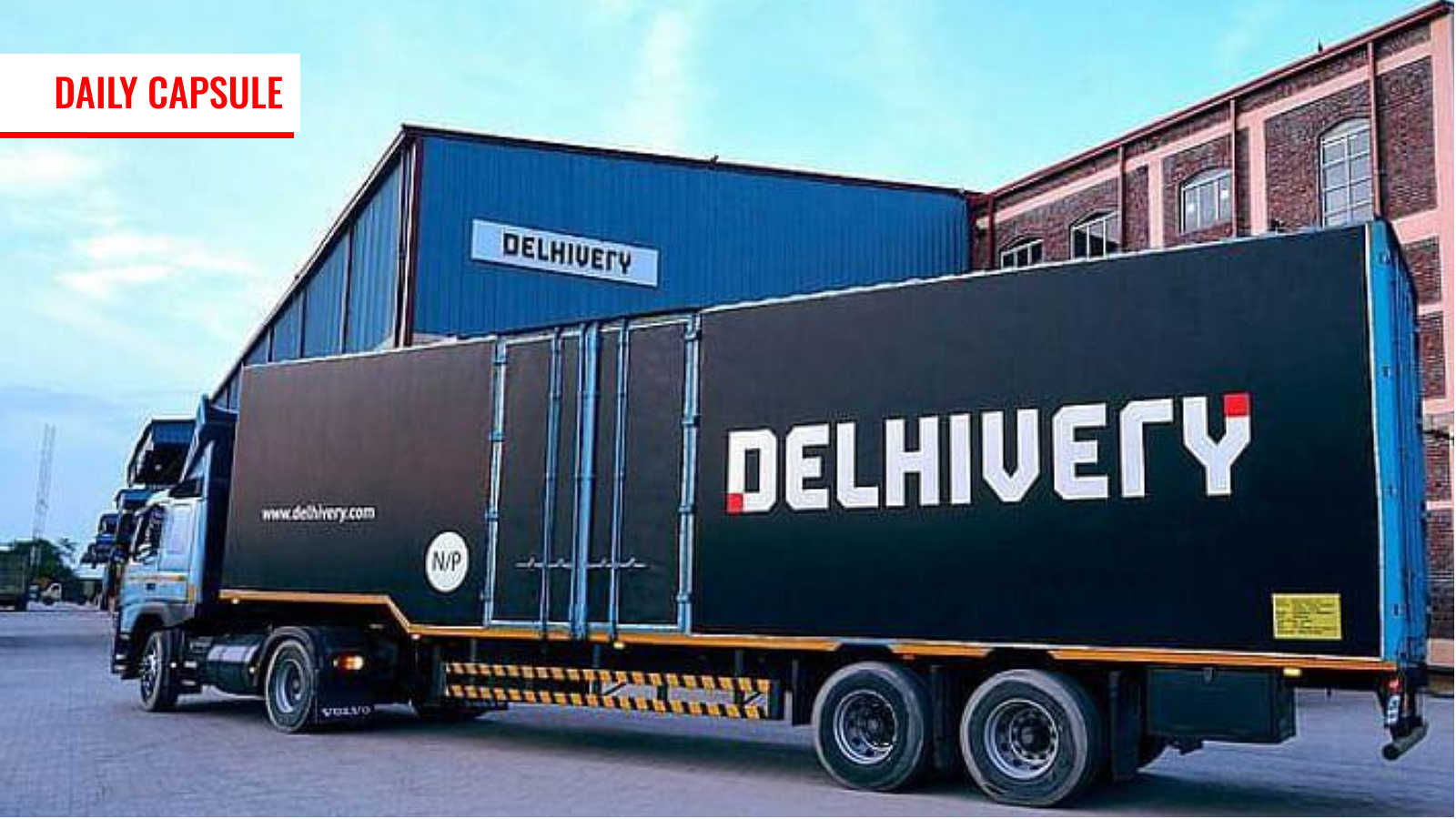
Delhivery's numbers tell you something uncomfortable though: revenue up 28% to ₹2,931 crore, but net profit down 65% to ₹32 crore. That's what happens when you're scaling volume in a competitive logistics market without pricing power. If you're building fulfillment or supply chain products, watch this carefully—unit economics matter more than top-line growth, and the margin squeeze is real. Meanwhile, healthtech builders should note that 17.4 lakh blood components are being discarded despite record collection of 15.71 million units. That's a supply chain failure dressed up as success, and there's a product opportunity sitting in inventory management and logistics optimization.
The deeper pattern: regulation (RBI's leverage rules), talent (AI-driven reskilling), and operational efficiency (why blood gets wasted, why logistics margins compress) are all pointing the same direction. Builders who can thread these needles—who understand capital constraints, can help teams navigate AI transitions, and solve unsexy operational problems—will win. Spend this week mapping how your product sits in this landscape.
The central bank has proposed a comprehensive overhaul of the leverage ratio framework for commercial banks to align India's capital regulations with the latest Basel Committee standards. Builders in lending and credit infrastructure need to track these capital adequacy changes—they will reshape how much risk banks can take and therefore how aggressively they can grow lending products.
Around 32 per cent of surveyed entities expect AI will drive significant re-skilling and job transformation rather than large net reductions, per the International Financial Services Centres Authority (IFSC) AI Survey. EdTech and workflow automation builders should design for transformation—not displacement—and target companies actively re-skilling existing teams on AI-augmented roles.
Companies are likely to move beyond simply deploying AI tools and increasingly focus on redesigning workflows, operating models and roles to unlock enterprise-level value, per McKinsey research. Platform and workflow builders have a 12–18 month window to position as the operating system for this re-architecture—after that, in-house solutions will dominate.
Delhivery reported a 28% rise in Q1 FY27 revenue to ₹2,931 Cr, even as net profit fell 65% to ₹32 Cr, per YourStory. Logistics and fulfillment builders should prepare for prolonged margin compression—growth without profitability signals that fixed cost structures (warehousing, vehicles, staff) are not scaling with e-commerce demand as expected. Focus on unit economics, not topline.
A federal trial, one of the most consequential legal proceedings targeting social networks in the U.S., will begin on August 12, 2026 with jury selection at a federal court in Oakland. Consumer app builders and content platforms should assume increased regulatory and legal liability around youth user data, algorithm transparency and content moderation—U.S. precedent will ripple globally within 12–18 months.
India collected 15.71 million units of blood in 2025 while discarding 17.4 lakh components, per official data cited by ET HealthWorld. HealthTech builders have a clear gap to fill: inventory management, demand forecasting and cold chain tracking for blood and blood products. The waste suggests logistics and matching infrastructure, not supply shortage, is the bottleneck.
Bengaluru-based Aule Space is building a jetpack that docks with satellites after they run out of fuel, extending their lives by a few years. August opened on a positive note driven by the $120 million deal for River Mobility. Satellite and space infrastructure builders have a clear tailwind—orbital servicing and lifecycle extension are now fundable, signaling investor appetite for deep tech with near-term revenue paths.
Republican John Thune filed to set up a key procedural vote on the Clarity Act when the U.S. Senate returns from August recess in mid-September, potentially paving the way for a full floor vote on the bill. Web3 and crypto builders should assume federal regulation is now inevitable—the question is not whether, but how. Begin mapping compliance readiness for token classification, custody, and trading rules.
 Arjun’s TLDR
 Meera’s TLDR