Shiprocket's stellar IPO debut signals booming Indian logistics ambitions — Product Growth, 17 August
The essential morning brief for Indian product builders — every number sourced and dated, every industry covered.
17 August 2026 · Product Growth Daily Brief · Presented by Arjun & Meera · Editorial standards
🎧 Listen to this edition — Arjun & Meera, 17 August 2026
Arjun & Meera · Today's brief
Stripe just dropped $7B on OpenRouter, and that number should make every Indian SaaS founder sit up: the fintech giant isn't buying an AI company—it's buying the infrastructure to embed cost-optimized intelligence into every transaction it touches. This is the playbook now. You don't build AI as a feature; you acquire it as a layer. Meanwhile, Anthropic is internally projecting $190-200B revenue by 2028, which tells you something darker: the AI arms race has already priced in an outcome where a handful of compute-backed companies own the entire value chain. For builders outside that circle, the question isn't "how do we build AI" anymore—it's "which infrastructure layer do we own before someone like Stripe acquires it."
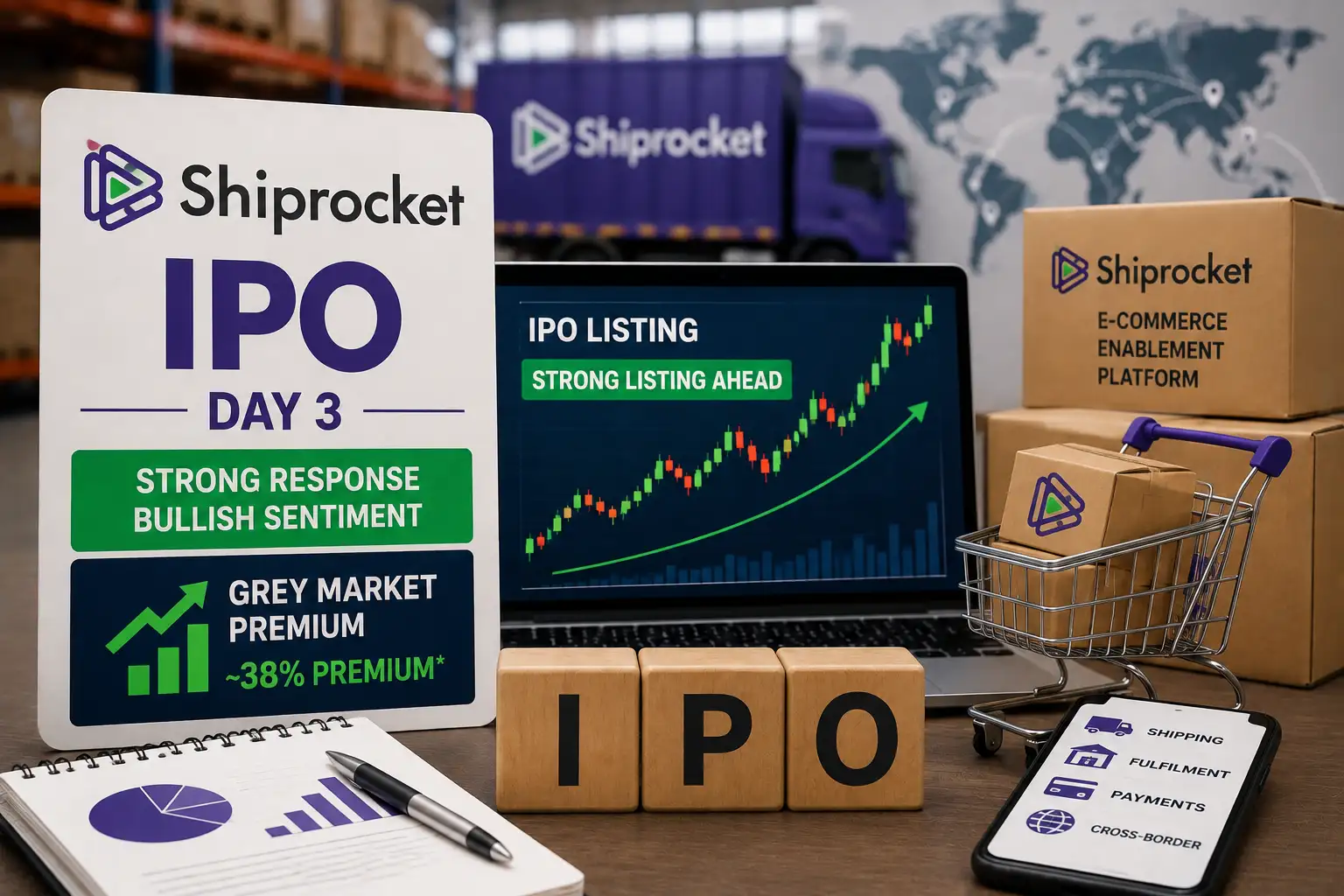
The Indian market is showing real conviction, though the terms are brutal. Shiprocket's IPO subscribed 99.31x with a 38% grey market premium, proof that supply chain SaaS works here—but notice what it took: a multi-year grind, institutional backing, and a market where logistics is the bottleneck. That same month, ecommerce order volumes jumped 31% during Independence Day sales. The winners aren't building new categories; they're automating existing ones. Duolingo buying Animade, an animation studio, isn't about outsourcing—it's about owning the content moat that makes retention stick. Ola Electric's move into energy storage tells you founders are thinking vertically now: scooters led to batteries, batteries lead to grid scale.
But here's what should worry you more than Stripe or Anthropic: the US states are seeking $200B in damages from Meta over addictive design targeting minors. That regulatory momentum will eventually reach India. Meanwhile, healthtech and insurtech are discovering that AI's real value isn't in replacing doctors or claims adjusters—it's in demolishing the administrative tax that keeps them from doing actual work. India's ₹1 lakh crore RDI fund, though, is struggling with governance and transparency. Patient capital only works if founders trust it won't vanish into bureaucracy.
The thread connecting all of this: consolidation upward (Stripe, Anthropic), vertical integration where you can defend it (Duolingo, Ola, Shiprocket), and ruthless automation of the work nobody wants to do. If you're building something that sits in the middle—a platform, a horizontal tool, a feature-light SaaS—this week is the time to decide whether you're an acquisition target or a layer in someone else's stack. Watch Shiprocket's listing price relative to that grey market premium; it'll tell you exactly how much conviction the market has in B2B logistics right now.
Stripe completed a $7B+ acquisition of AI firm OpenRouter, which had raised at a $1.3B valuation just months prior. The deal underscores fintech's pivot toward cost-efficient AI tooling—builders should expect payments infrastructure to become a delivery layer for AI workloads, not just transaction settlement.
Anthropic is internally forecasting $190-200B in revenue by 2028, per two sources with access to company financials. This suggests Anthropic values itself as an AI infrastructure layer, not an app—builders should assume pricing power in LLM inference and deployment, not consumer-facing AI products.
Shiprocket's ₹1,617.59 Cr IPO was oversubscribed 99.31 times, with QIBs subscribing 122.8 times, indicating institutional conviction in supply chain SaaS. Logistics SaaS at scale is no longer a growth-stage bet—expect public markets to reward profitability, not GMV multiples.
Order volumes on the Uniware platform jumped 31% during August 6-14 Independence Day sales, with gross merchandise value (GMV) up 30% year-over-year. This signals sustained consumer spending momentum and platform consolidation—builders should expect sustained 25%+ growth in order volume if they can scale logistics and payment rails.
Duolingo acquired Animade, a London-based animation studio, to expand in-house creative capabilities for its language-learning platform. This shows the winner in edtech is building vertical control over content creation—platform builders should invest in production IP, not just distribution.
A coalition of US states will seek $200B in damages against Meta, alleging intentional addictive design on Facebook and Instagram targeting children, with trial beginning Tuesday. This sets a precedent: social platforms' engagement optimization tactics are now a civil liability vector—builders should expect regulatory pushback on algorithmic recommendation amplification.
AI tools handling clinical documentation and administrative tasks could free physicians for patient care as healthcare faces a documented global worker shortage. Healthtech builders should focus on regulatory-grade clinical note automation and claims processing—the ROI is measured in freed physician time, not user engagement.
AI is being deployed across insurance underwriting, claims processing, fraud detection, and customer service to eliminate repetitive work, not replace humans. Insurance professionals will shift to higher-judgment tasks. Insurtech builders should focus on regulatory-grade workflow automation that audits and explains AI recommendations—explainability is the compliance gate.
India's Research, Development and Innovation (RDI) fund, allocated ₹1 Lakh Cr to unlock patient capital for deeptech startups, is encountering governance challenges and investor demands for more transparency and independent oversight. Deeptech founders should expect slower deployment, more scrutiny, and governance delays—assume 18-24 month gaps between funding announcements and actual capital availability.
Ola Electric unveiled its Shakti energy storage product line spanning residential, commercial, and grid-scale applications beyond its core scooter business. This move signals EV makers transitioning to energy infrastructure plays—builders should expect vertical integration and energy arbitrage (buy-low storage, sell-high dispatch) to become primary margin drivers for mobility companies.
A US regulator approved the bank charter application for Trump-backed World Liberty Financial, moving it toward final approval, which would enable asset custody and faster settlement without deposit-taking. This signals regulatory willingness to certify crypto-native financial infrastructure—web3 builders should expect a slow but steady bridge between decentralized finance and traditional banking rails.
 Arjun’s TLDR
 Meera’s TLDR