UPI's Thirteen Thousand-Fold Growth Reshapes Indian Payment Ecosystem — Product Growth, 25 August
The essential morning brief for Indian product builders — every number sourced and dated, every industry covered.
25 August 2026 · Product Growth Daily Brief · Presented by Arjun & Meera · Editorial standards
🎧 Listen to this edition — Arjun & Meera, 25 August 2026
Arjun & Meera · Today's brief
UPI just crossed Rs 24,162 crore in FY26—a 13,000x jump from Rs 1.78 crore in FY17. That's not a growth story anymore; it's infrastructure saturation. What matters to you: the payment layer is solved. The real game now is what gets built on top of it. Amazon and Flipkart are already making moves, restructuring seller fee calculations ahead of festival season because the unit economics of their logistics are under pressure. When incumbents start tweaking fee structures instead of taking share, it signals margin compression—which means builders in logistics, fintech, and SaaS layer solutions have room to solve new problems for sellers and platforms.
The broader shift is toward context and orchestration. UBS's CTO framed agentic AI as the next frontier—systems that understand context, connect dots, and work autonomously. That's different from copilots that just assist. Lead School is betting on this hard, targeting 20% growth in FY27 with AI products scaling, eyeing profitability this year and an IPO in 2-3 years. The playbook is clear: if you're in SaaS, fintech, or edtech, raw automation isn't the moat anymore. Context is. Being able to understand what a seller, student, or enterprise actually needs across fragmented data points—that's what separates the $100M exits from the $1B ones.
Watch regulation though. New Zealand mandating facial age verification on social platforms signals where democracies are heading on platform accountability. Health authorities in Haryana are mandating 100% flu testing for severe respiratory cases as H1N1 surges. These aren't just compliance headaches—they're signals of where product opportunity lies. Healthtech builders should be thinking about diagnostic automation and reporting infrastructure for hospitals; consumer platform builders need to start designing for age verification as a feature, not a legal tax.
Get ahead of what's coming in Q4: premiumization of fintech (credit layers on UPI), context-aware automation in SaaS, and logistics cost optimization. If you're selling to platforms or SMBs, your pitch should center on reducing churn and margin leakage, not just revenue addition.
UPI transaction volumes reached Rs 24,162 crore in FY26, climbing from Rs 1.78 crore in FY17 across 703 banks, per YourStory. Builders should watch for credit layers and B2B rails on UPI—ESAF SFB's Credit Line launching Q1 FY28 signals the next wave of embedded financial services.
SpaceX and Nvidia developed a space-optimized Vera Rubin NVL72 AI system slated for orbital launch in Q4 2027, per ET Tech and Elon Musk. Indian deeptech builders should track this—space-grade AI hardware will unlock new inference and edge compute use cases in satellite imagery, climate, and telecom that previously required ground processing.
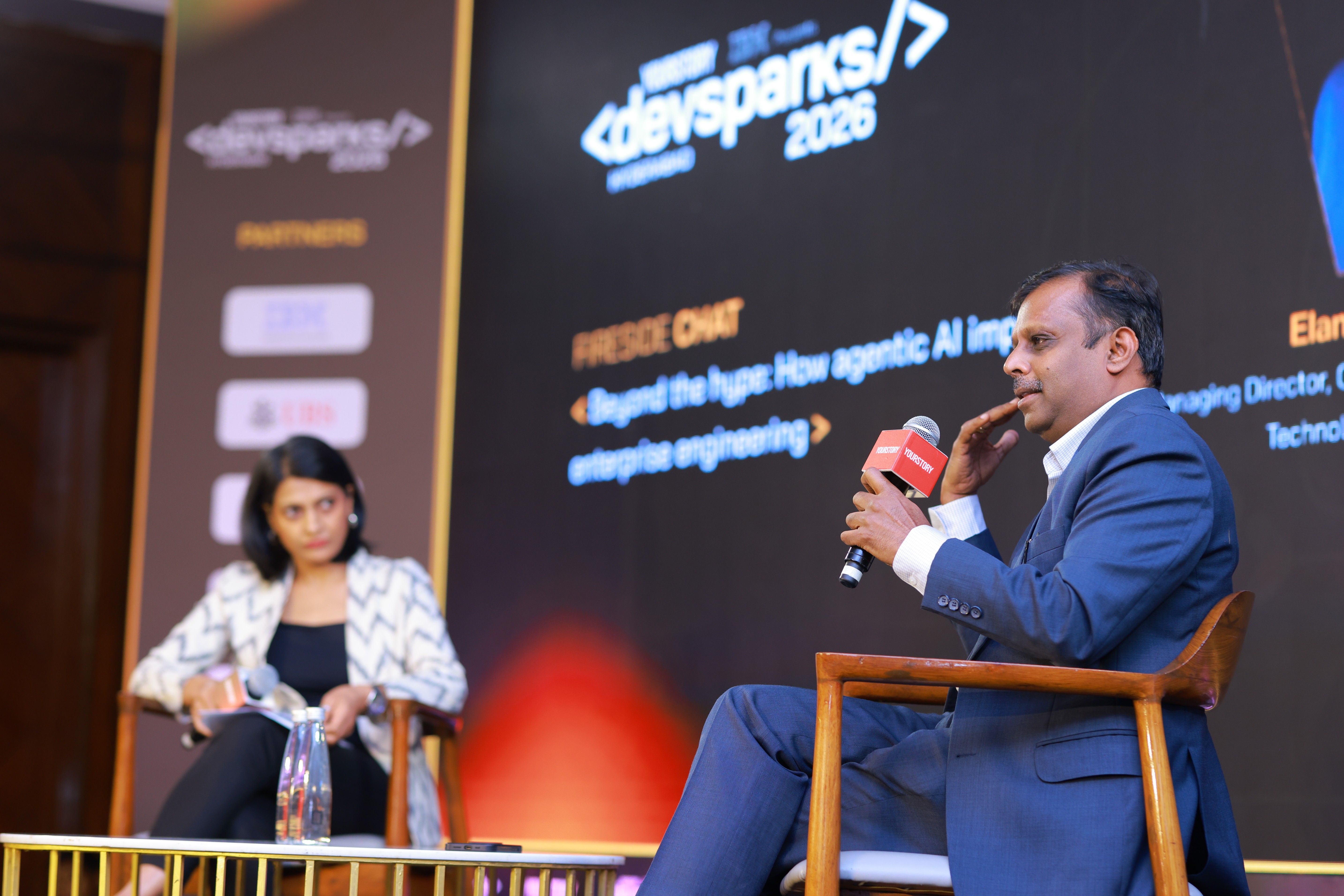
UBS CTO Elango Somasundaram framed agentic AI as the next frontier beyond copilots—systems that understand context, connect dots, and orchestrate enterprise workflows, per YourStory. SaaS builders should recognize that static integrations and point-solutions lose to agents that own context; data access and workflow ownership will determine market power.
Amazon India restructured order cancellation fees for Easy Ship and Self Ship sellers effective August 17, 2026, with Flipkart following suit ahead of peak season, per ET Tech. Sellers should audit their P&L per fulfillment method immediately—platform fee transparency is tightening and volatility around festival margin is priced into these moves.
Lead School expects revenue to grow ~20% in FY27 while Ebitda triples to ₹90 crore as it scales AI products and aims to break even or turn profitable this year, per ET Tech. The IPO timeline signals profitability-first math—builders should model how AI personalization *reduces* cost per student acquired and retained, not just improves learning outcomes.
New Zealand's bill mandates social media platforms take reasonable steps to verify user ages, including facial technology and digital identity documents, per ET Tech. Indian consumer platforms should expect similar regulation; builders should start auditing KYC/age verification flows and consider partnerships with identity providers to avoid service disruptions.
Haryana health authorities directed facilities to test 100% of SARI (severe acute respiratory infection) patients for influenza and at least 5% of ILI (influenza-like illness) cases, per ET HealthWorld. Healthtech builders should prepare diagnostic and lab-integration tooling for surge testing—government mandates create volume predictability and unit economics tailwinds.
Shriram General Insurance is growing at more than twice the industry pace but cites rising repair costs, weak motor persistency, and EV economics uncertainty as key challenges, per ET BFSI. Insurtech builders in auto should model EV claims inflation and telematics-driven underwriting as urgent—cost structures will compress before they stabilize.
College Rivals season 4, India's premier collegiate gaming movement, announced EA Sports as its official game partner for the season, per AnimationXpress. Gaming builders should track how esports franchises and publisher partnerships are consolidating—integration with mainstream publishers reduces discoverability friction and brings FY incentives.
CoinDCX introduced Daily SIP enabling crypto investments from as little as ₹100 with XIRR (extended internal rate of return) metrics tracking investment performance over time, per ET Tech. Web3 and crypto builders should recognize SIP as a retail onboarding and retention mechanism—framing crypto as a recurring savings asset, not a trading vehicle, expands addressable TAM and reduces churn.

 Arjun’s TLDR
 Meera’s TLDR