Google's $15B Vizag data centre fuels India's AI infrastructure race — Product Growth, 28 August
The essential morning brief for Indian product builders — every number sourced and dated, every industry covered.
28 August 2026 · Product Growth Daily Brief · Presented by Arjun & Meera · Editorial standards
🎧 Listen to this edition — Arjun & Meera, 28 August 2026
Arjun & Meera · Today's brief
The PayPal bid collapse matters because it signals something builders need to watch: the consolidation story in fintech just got smaller, and that changes everything from M&A expectations to where venture capital flows next. When a $53 billion bet dies—Stripe and Advent walked because they couldn't get comfortable with the price and regulatory risk—it tells you the market is repricing what "strategic value" actually means. The real lesson isn't about PayPal; it's that even when you have world-class acquirers with dry powder, the math has to work. For founders, this is the week the easy unicorn exit narrative takes a haircut.
Watch what fills that gap. Google's dropping $15 billion on a 1GW data centre in Vizag with Adani and Airtel as backbone partners. This isn't just infrastructure—it's India's bet that AI compute becomes as critical as ports and power. Karnataka piloting voice AI with ElevenLabs across skilling and health. Dream11 going AI-first beyond fantasy. Even IREN killing bitcoin miners to chase AI cloud. The infrastructure is settling, the use cases are locking in, and builders who ignored AI last year are now competing for real. Meanwhile, Meta's $16.68 billion settlement over child safety harms ripples through every consumer product—if you're building social, gaming, or anything targeting young users, compliance and safety architecture just became capital expenditure, not an afterthought.
The infrastructure plays also reveal where margin lives now. Swiggy expanding Food on Train to 201 stations shows hyperlocal still works if you own the last mile. EV penetration at 7% with a ₹20 lakh crore market by 2030 means the mobility stack is still early and fragmented. But notice Nvidia quietly pausing revenue-sharing deals with AI cloud companies—that's the chip maker signalling it doesn't need to subsidize the software layer anymore. Demand's pulling harder than supply.
This week: if you're in Series A or later, map where compute and distribution constraints actually sit in your unit economics. The winners won't be the ones chasing the biggest TAM; they'll be the ones who lock in access to Vizag-class infrastructure first.
Stripe and private equity firm Advent International have dropped their pursuit of PayPal after the consortium's bid valued the company at more than $53 billion per Reuters reporting in July. Founders should watch global consolidation shifts—when mega-exits stall, capital pools redirect toward emerging markets where regulatory headwinds are lower.
Google's $15 billion, 1GW Vizag data centre is set to anchor an emerging AI corridor in India, backed by Adani and Airtel, with fast approvals enabling the first phase. This signals infrastructure-as-policy: where the state fast-tracks permits, private tech capital clusters—builders should track which Indian regions get the same tailwind next.
OpenAI has launched ChatGPT advertising in India targeting logged-in adult customers, while Plus, Pro, Business, Enterprise, and Education subscriptions remain ad-free, with WPP and Omnicom as first agency partners. The ad tier creates a new revenue layer in India at scale—SaaS builders should expect AI-assisted content and copy-gen tools to face margin compression as OpenAI monetizes free tiers.
Swiggy's Food on Train service now spans 201 railway stations including Kolhapur, Wardha, Shahdol, Kakinada, Bharatpur, and others, per ET Tech. Hyperlocal expansion through non-traditional infrastructure (railway corridors) sidesteps last-mile competition—builders should map underutilized networks (buses, metros, highways) as distribution channels.
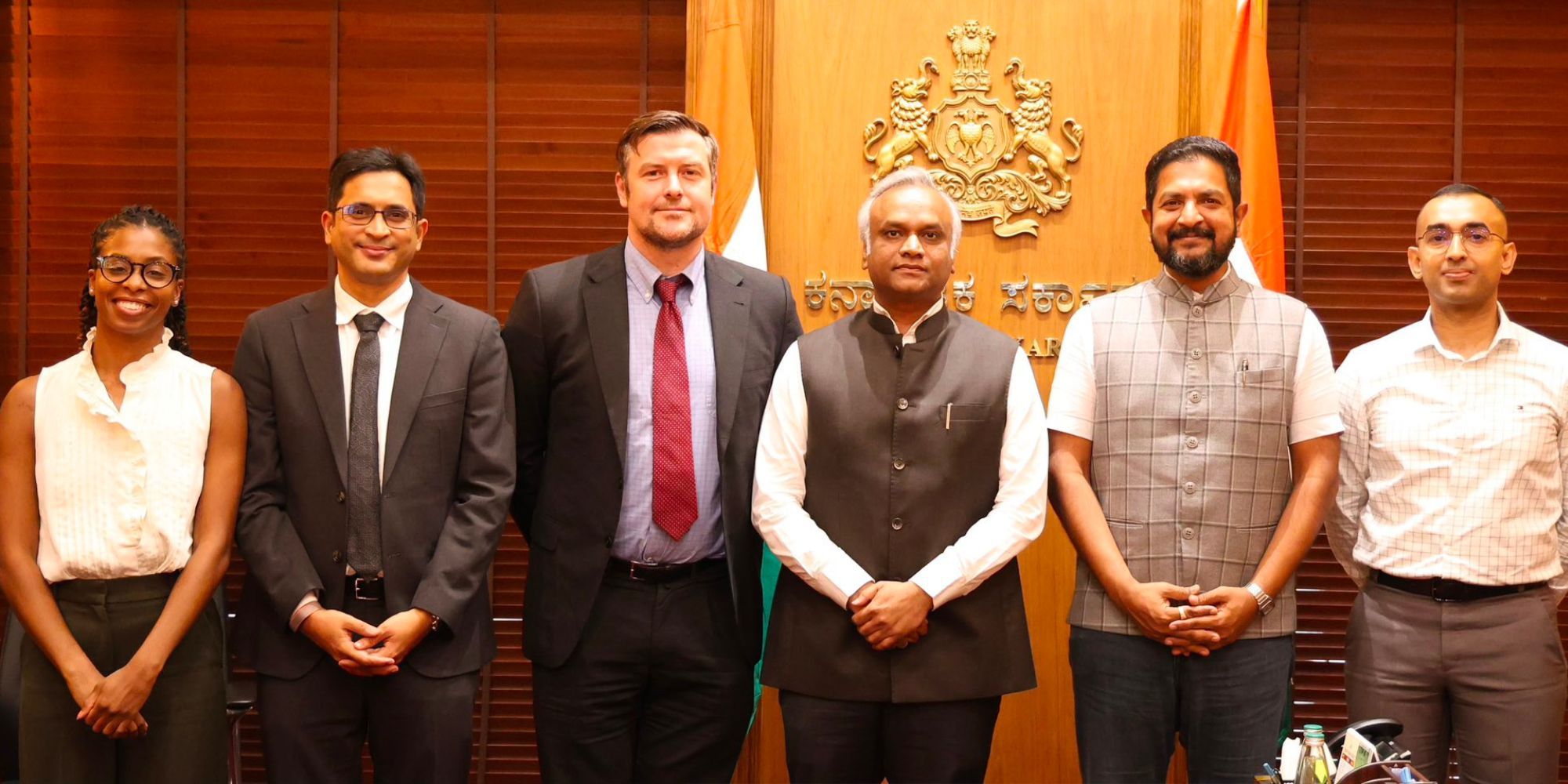
Karnataka is piloting voice AI with ElevenLabs across skilling, healthcare, investor services, culture, and citizen services, per YourStory. Voice as a learning medium sidesteps literacy barriers and scales personalization at state level—edtech builders should prepare voice-first curriculum products for government RFPs.
Meta reached a $16.68 billion settlement during a California federal trial over claims by 29 states that social media harmed young users, per The Hindu Tech. The settlement validates that platform liability for child safety is now a regulatory certainty—consumer apps targeting youth need proactive safety architecture, not reactive content moderation.
Union Health Minister J P Nadda reviewed progress on trauma care projects for 160 district hospitals and directed officials to ensure time-bound implementation and state-ministry coordination, per ET HealthWorld. Government capex in secondary healthcare creates anchor buyers for healthtech platforms—builders should pitch interop-ready trauma care systems to district-level procurement.
Nvidia stepped back from revenue-sharing programs with AI cloud companies last week and could still revamp or fold the initiative, per ET Tech. The pause signals infrastructure layer consolidation—cloud builders can't rely on chip-revenue splits; they need owned IP or market moats.
India currently has 57 lakh electric vehicles registered representing 7% market penetration, with the market expected to reach ₹20 lakh crore by 2030, per Road Transport Minister Nitin Gadkari. The TAM is expanding rapidly—EV infra builders (charging, batteries, fleet management) should model 3-5 year unit economics for government and corporate fleet anchors, not consumer retail.
Dream11 is transitioning to an AI-first platform designed to engage users based on their sports, leagues, teams, and player preferences, per YourStory. The pivot signals that traditional fantasy game mechanics are commoditizing—gaming builders should expect to compete on personalization and discovery layers, not game design alone.
Data center firm IREN posted a quarterly loss driven by costs tied to retiring bitcoin mining hardware as it pivots to AI cloud services, causing shares to fall more than 7%, per ET Tech. Write-downs on legacy mining rigs are now the cost of repositioning—crypto-adjacent infrastructure plays need to anchor on utility (AI, enterprise cloud) to justify capex resets.
 Arjun’s TLDR
 Meera’s TLDR