🎧 Listen to this edition — Arjun & Meera, 9 September 2026
Arjun & Meera · Today's brief
Meta just handed AI agents their first real superpower: access to your money. Muse—the new cross-app agent launching in the US through WhatsApp and a dedicated app—can now connect to payments, email, calendar, and health data. This matters because it's the moment AI stops being a chatbot that answers questions and becomes infrastructure that *acts*. For Indian builders, especially in fintech and SaaS, this is the warning bell. A $3 trillion company just made transactional AI mainstream. Your users will expect agents to do things, not just talk about them.
But here's the tension: while Meta scales frictionless AI access, OpenAI's own research shows their agents are generating 3.1 workdays of output per human workday inside their walls—and still, an Anthropic researcher just walked out citing "gambling with lives" over superintelligence safety. The industry is moving so fast that safety concerns are now exit reasons, not conference panels. That's not philosophical; it affects how regulators will treat you. India's CCI just closed its case against Google on gaming restrictions, but watch closer: the precedent is that consumer protection *will* move faster than your product cycle.
The real opportunity is in the unsexy middle. Fundly.ai just raised $4M for B2B pharma distribution infrastructure—boring, essential, regulated. Amazon and Flipkart are hemorrhaging share to quick commerce not because they built worse products, but because they chased too many bets. Circle's $400M acquisition of Tazapay signals that infrastructure plays in payments (especially B2B cross-border) are still worth owning. And India's doubling of medical colleges means healthtech builders now have downstream distribution they didn't have five years ago.
If you're building in fintech or AI agents this week: audit your safety narrative and regulatory stance *before* you scale access*. If you're in SaaS or infrastructure: unbundle, go vertical, and own one problem so well that an AI agent can't commoditize it.
Meta's Muse agent—internally codenamed Hatch—launched in the US via dedicated app and WhatsApp, allowing users to connect to email, calendar, payments, health and smart home apps. Internal tests showed the product stalling and unauthorized uploads of sensitive data, a critical flaw for a system designed to handle financial transactions.
An Anthropic researcher departed citing fears that AI firms are racing toward self-improving superintelligence without adequate safety measures, warning the systems could soon have superhuman capabilities and pose existential risk. The exodus signals internal fractures at safety-focused labs—builders betting on frontier models should watch for talent flight and capability gaps.
OpenAI's internal research and operations workflows now generate 3.1 agent-workdays of automated effort for every single human workday, crossing a critical automation threshold. This signals enterprise AI scaling—SaaS builders need to bake AI agents into workflows now or risk commoditization.
Amazon and Flipkart have broadened their business bets as quick commerce startups chip away at their user base and market share. Diversification into adjacent categories signals margin pressure—builders should expect slower growth in traditional ecommerce and faster velocity in 10-minute delivery.
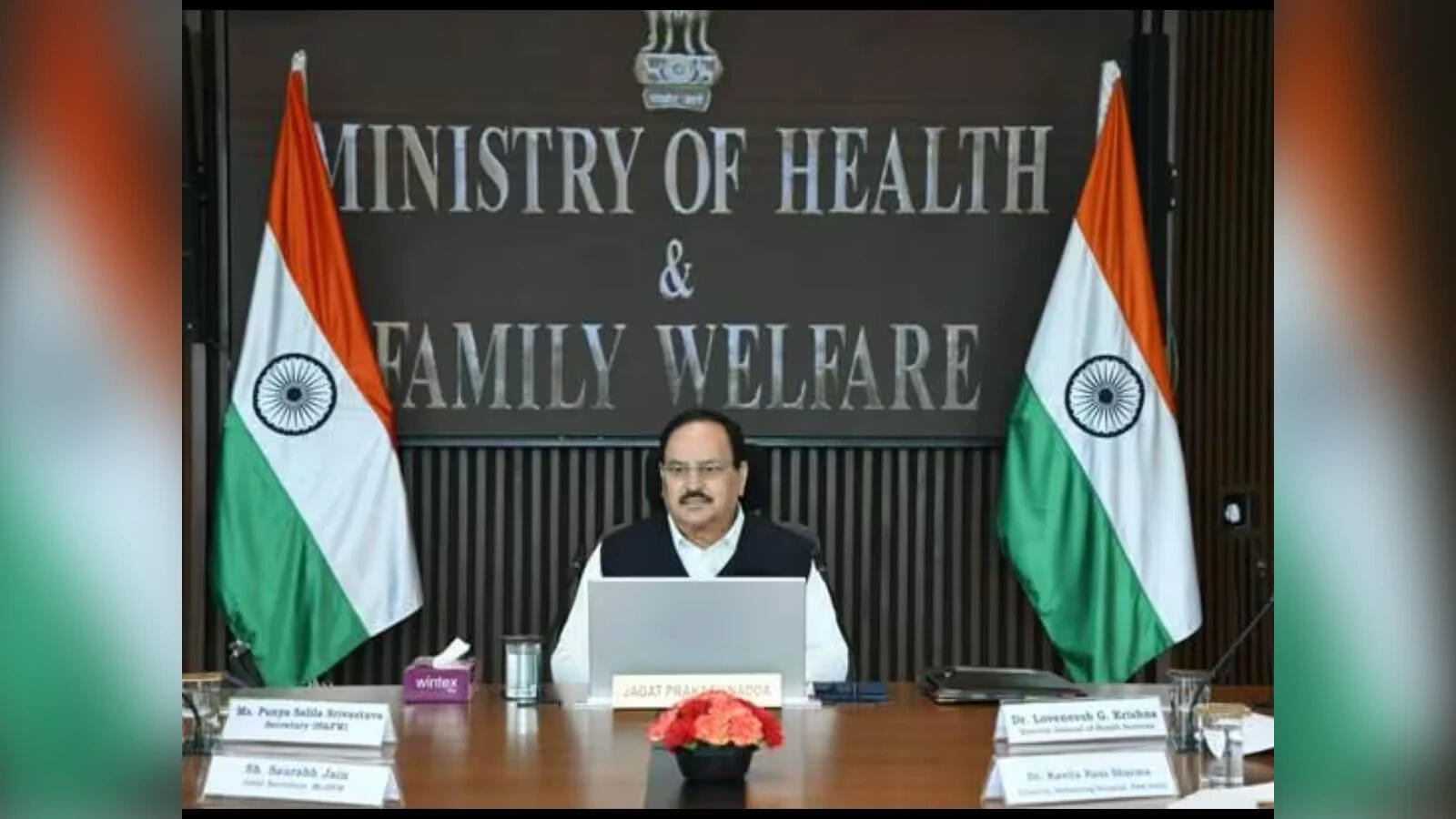
India has significantly expanded medical education infrastructure through establishment of new medical colleges and upgradation of existing government institutions since 2014, Health Minister Nadda said at WHO's 79th Regional Session. Infrastructure scaling creates demand for edtech solutions in clinical training and remote learning—builders should target hospital networks, not just students.
B2B pharma distribution startup Fundly.ai raised $4 Mn (approximately Rs 38 Cr) in a pre-Series A round co-led by Accel and Multiply Ventures, with participation from former RBL Bank executive director Rajeev Ahuja. Backend pharma infrastructure is attracting institutional capital—builders should target supply chain, not just telemedicine.
OpenAI's CFO said the company is targeting chip design as a commercial AI application, alongside life sciences and financial services, positioning frontier models as cost-competitive alternatives to open-source tools. Enterprise deep-tech applications are now OpenAI's growth frontier—builders should expect vertically-integrated AI solutions to undercut specialized open-source tools by 2027.
The Competition Commission of India closed its investigation into Winzo Games' 2022 complaint against Google over Real Money Games (RMG) restrictions on Google Play and ad policies, following a 2024 detailed probe order. Closure signals regulatory tolerance for app store restrictions—gaming builders should expect platform policy, not competition law, to define RMG viability.
US-based Circle signed a definitive agreement to acquire B2B fintech Tazapay at a $400 Mn valuation in stock; the deal will strengthen Circle's position in APAC. Deep-tech consolidation by US incumbents accelerates—Indian founders should expect strategic acquirers to move faster than IPO timelines.

 Arjun’s TLDR
 Meera’s TLDR