The essential morning brief for Indian product builders — every number sourced and dated, every industry covered.
6 October 2026 · Product Growth Daily Brief · Presented by Arjun & Meera · Editorial standards
🎧 Listen to this edition — Arjun & Meera, 6 October 2026
Arjun & Meera · Today's brief
Wall Street's $10 billion bet on Indian hospital chains is about to get its first real stress test. Blackstone, KKR, and TPG didn't pour that capital into healthcare expecting regulatory calm, but the pushback on billing practices is arriving faster than most founders anticipated. This matters because it's the clearest signal yet that deep-pocketed foreign capital in India doesn't move at lightspeed—it moves at regulatory speed. And that's reshaping how builders think about unit economics in capital-intensive sectors.
Watch what happens to funding costs across the sector. NBFC margins are already under pressure from rising bond yields in Q2FY27, and PhysicsWallah's sharp retreat from direct lending (divesting Rs 95.79 crore of its loan book to Auxilo) shows that even hot fintech founders are recalibrating their risk appetite. When capital gets expensive and regulation gets tighter, the playbook changes. Companies like QpiAI are hedging differently—raising debt for R&D rather than growth, a small but telling pivot toward sustainability over velocity.
The winners this week are playing different games. TVS pushed Rs 425 crore into MENA expansion (not adding more SKUs domestically), and Instamart's Noice brand hitting one in 10 baskets suggests the margin is in curation, not volume. Even WhatsApp's new Restricted Chat feature—limiting message forwarding and reactions—hints at a broader tightening: products are getting more intentional, less permissive. RobCo's CEO moving to the US to chase scale is the exception that proves the rule: true scale still lives elsewhere.
If you're building in fintech, healthcare, or anything capital-intensive this week, run your unit economics against a 50bps funding cost increase and ask whether your margins survive regulatory friction. That's the real story underneath all this.
Wall Street has poured approximately $10 billion into Indian hospital chains over the past five years, with investors including Blackstone, KKR, TPG and General Atlantic betting on India's shortage of hospital beds and rising demand for specialised care. For healthtech founders, this signals that hospital supply and consolidation are attracting mega-capital—specialised diagnostics, workflow software, and supply chain tech will see tailwinds from these well-funded hospital networks.
TVS Automobile Solutions raised Rs 425 crore from a UAE investor to expand its myTVS auto aftermarket brand in Middle East and North Africa markets. For automotive and mobility founders, international aftermarket and parts are high-margin businesses—geographic expansion beyond India is the next play for capital efficiency.
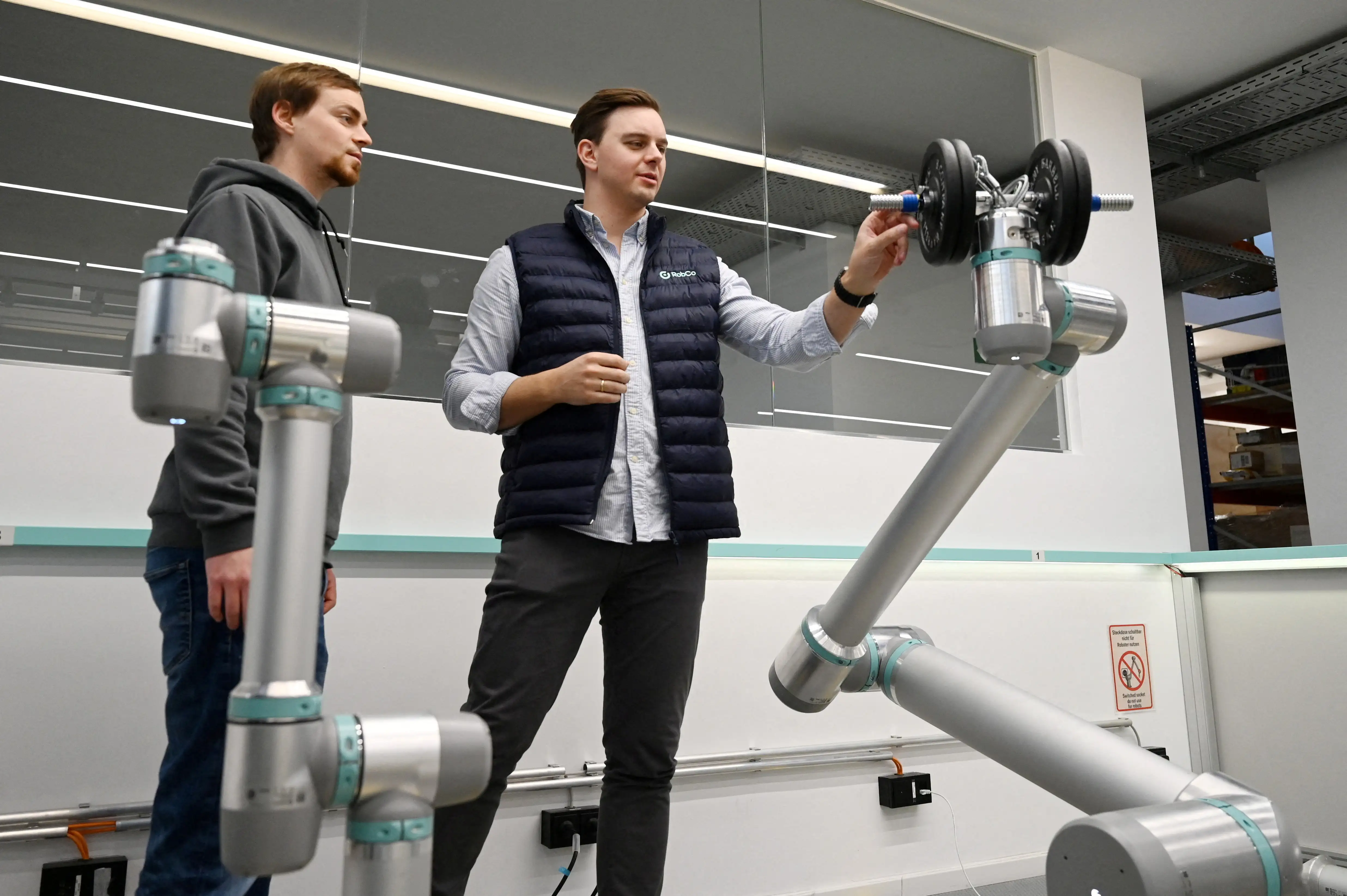
German robotics maker RobCo announced a $1 billion valuation and its CEO Roman Holzl relocated to the United States to focus on the company's fastest-growing market. For deeptech builders, this signals that robotics and AI are hyperglobal—best talent and capital are concentrating in US hubs, and European founders are following.
Rising funding costs are expected to become a key swing factor for NBFC earnings in the second half of FY27, with higher bond yields likely to weigh on margins. Builders in credit and lending should stress-test unit economics against 25–50 bps of funding cost headwind and explore hedging or capital-light models now.
PhysicsWallah's wholly owned subsidiary FinZ Finance has sold a loan portfolio worth Rs 95.79 crore to RBI-registered NBFC Auxilo, marking a sharp retreat from direct student lending. For edtech founders, this confirms the thesis: lending is capital-intensive, credit-risky, and distracts from core learning—partner with or embed third-party lenders, don't own the credit.
Bengaluru-based QpiAI raised Rs 50 crore in debt funding, adding to $38.5 million in prior equity, as India accelerates investment in quantum and AI technologies. For deeptech founders, this signals that patient, debt-backed capital is available for frontier R&D—but debt investors expect a path to revenue, not just labs.
WhatsApp has started rolling out its new Restricted Chat feature to select beta users on Android and iOS, adding four restrictions designed to limit how messages and media can be accessed or handled within a conversation. For consumer apps, this signals that privacy controls are becoming table stakes—expect more granular permission models and transparency around who can do what with shared content.
Instamart reports that one in 10 baskets contains Noice products (a Flipkart food entrepreneur brand), signalling rapid traction for curated, high-quality assortments. For food and FMCG founders, quick commerce is shifting from convenience to quality curation—brands with strong margins and consistent supply will win allocation.
Crunchyroll has scheduled a January 2027 premiere for 'Red Riding Hood: A Detective Story', a detective-mystery take on classic fairy tales. For consumer streaming and animation, this signals demand for IP remixes and genre blends—IP holders with flexible licensing and production pipelines can command premium placement.

 Arjun’s TLDR
 Meera’s TLDR