Arjun & Meera · Today's brief
The antidepressant market is exploding in rupees but shrinking in pills—and that contradiction is your roadmap for the next decade of Indian healthtech. Rs 2,842 crore in revenue with declining unit volumes means patients are paying more for fewer doses, a telltale sign that mental health in India is shifting from generic commodity to premium, personalized care. This isn't just a pharma story; it's permission for founders to build the infrastructure around diagnosis, monitoring, and compliance that the market is already pricing in. When price inflation outpaces volume, someone upstream is betting on better outcomes, not just bulk.
The funding moves reinforce this texture. Nat Habit closed $15 million on natural wellness positioning—premium margins in a category where consumers now pay more for efficacy signals. Juspay doubled down on AI infrastructure despite widening losses, betting that transaction volume scale matters more than quarterly profitability right now. And Bewakoof lost money while crossing Rs 200 crore in revenue, a mirror of what happens when D2C brands prioritize growth narratives over unit economics. The throughline: capital is still chasing scale, but it's increasingly willing to fund infrastructure plays (AI, identity, compliance tooling) where the moat builds over quarters, not weeks.
Watch the regulatory floor rising in parallel. IT Secretary Krishnan's call for a "judicious mix" of open and proprietary AI models isn't theory—it's signaling that data sovereignty will become a compliance checkbox for any product touching Indian user data. For fintech founders scaling internationally (see: Juspay's 30% growth), for healthtech builders handling sensitive diagnostics, for D2C platforms warehousing customer behavior—the cost of staying compliant just went up. OTPless hiring a CTO from BharatPe isn't just talent movement; it's a bet that identity and access controls will be table stakes in a regulated ecosystem.
Check this week whether MoEngage's post-IPO playbook (balancing compliance with innovation velocity) gets cited in earnings calls by other Indian SaaS founders. That's your signal for whether public markets are actually rewarding unit economics or still chasing topline growth theater.

India's antidepressant and mood-drug market grew 8.63% to Rs 2,842.1 crore in the 12 months ended September 2026, yet unit sales declined 0.76% over the same period. Doctors caution the figures must be viewed against unmet mental health treatment needs. For digital mental health builders: pricing is rising but patient volume is stagnant, suggesting payers (insurance, employers) are squeezing reimbursement while true patient needs remain underserved—you have a window to capture price-insensitive segments (premium corporate wellness, direct-to-consumer).

Natural personal care D2C firm Nat Habit closed a Rs 142.6 crore ($15 million) funding round led by Trident Growth Partners with participation from Bertelsmann, Firstport, and Linklight Ventures. For personal care D2C: beauty and wellness founders are still finding capital even in a profitability-focused climate—the signal is brand credibility and repeat customer CAC matter more than topline growth velocity.

Juspay reported 30% YoY revenue growth to Rs 664 crore in FY26, driven by international expansion and scaling daily transaction volumes, though strategic AI infrastructure investments widened net losses. Payments and AI are inseparable in fintech now—builders need to decide if they're investing for near-term profitability or betting on agentic payment workflows that may pay off 18+ months out.

MoEngage's CFO Narsimha Reddy discussed how finance leadership post-IPO must balance compliance and cash management with the innovation pressure public markets demand. For SaaS founders: hiring a CFO isn't about closing books—it's about building quarterly credibility with public markets while preserving product velocity. That tension is your new operational reality.
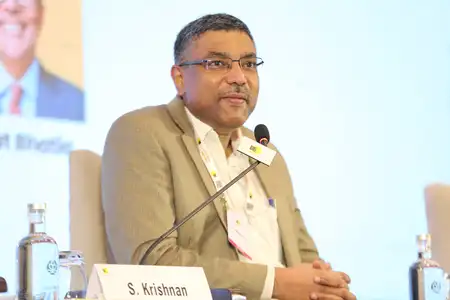
IT Secretary S Krishnan warned that relying solely on proprietary AI models risks 'data transfer' and models 'learning at our cost,' advocating for a strategic balance between open and proprietary AI to protect data sovereignty. For edtech builders: government policy is shifting toward open-source infrastructure and data localization. Expect procurement and partnership opportunities with government institutions to favor builders who can run models on-premises or on sovereign cloud infra.

D2C fashion brand Bewakoof reversed FY25 profitability gains, with net loss jumping nearly 20% to Rs 87.4 crore in FY26 despite revenue crossing Rs 200 crore. Builders in fashion D2C: scale doesn't compress unit economics anymore—you need unit margin discipline by Rs 50 crore in revenue, not just growth. Bewakoof's trajectory signals that apparel margins under category price wars remain stubborn.

Orkut Büyükkökten's petition for a new social network focused on real connection had collected over 270,000 signatures as of October 9, 2026, with the largest concentration from Brazil, followed by Portugal, Ireland, and Paraguay. For community and social commerce builders: nostalgia and geographic arbitrage can drive signup momentum fast, but retention and monetization in smaller markets (Brazil, Portugal) remain unproven—watch if this converts to active DAU or stays a curiosity.

iQOO 16, Motorola Signature 27, and Xiaomi 18 Pro all ship with Snapdragon 8 Elite chipsets that claim to enhance agentic AI, camera, battery, gaming, and thermal performance. For deeptech and hardware builders: edge AI inference is now baked into flagship SoCs. Your competitive window for on-device AI services just compressed—differentiate on domain-specific models, not generic inference.

Identity and access management startup OTPless hired former BharatPe technology head Geetanshu Singla as CTO to lead engineering, product, and infrastructure. For builders competing in auth/IAM, this signals the space is consolidating talent and doubling down on technical depth—Singla's background in fintech scale gives OTPless a runway for enterprise upsell.
 Arjun’s TLDR
 Meera’s TLDR