Arjun & Meera · Today's brief
The most consequential item for anyone building products today is Anthropic's proposal for a US bill that would let Washington block a model's release when there is an imminent risk of killing more than 50 people or causing more than $1 billion in damage. Whatever you think of the specifics, this is a frontier AI lab asking for a release-gating mechanism, which signals that model deployment is moving from a purely engineering decision toward something closer to regulated infrastructure. If you are building on top of foundation models, expect release cadences, eval requirements and vendor terms to shift accordingly, and start treating model access as a dependency you may not fully control.
The rest of the day rhymes with that theme of constraint and access. Morgan Stanley's equity research argues the AI race will increasingly hinge on who can secure electricity, financing and data-centre capacity rather than on chip supply alone. For India-based teams, that reframes the compute question from "which GPU" to "which provider has power and capacity contracted," and it makes infrastructure partnerships a product strategy question, not just a procurement one. On the capital side, Tonbo Imaging's ₹852.1 Cr IPO was oversubscribed 6.95X by the end of day two, a strong signal that public markets still reward deeptech with real hardware and defence-adjacent use cases. Yet the broader mood in new-age tech is more mixed: only 31 of 67 tracked stocks rose this week, and the combined market cap gained just $5.84 Bn to $160.55 Bn, with AceVector down 18%. Investors are being selective, not euphoric.
Commerce and health give a useful view of what operational discipline looks like in practice. Instakart Services, the Flipkart-owned company behind Ekart, cut its loss 98.3% to ₹26 Cr in FY26 from ₹1,508 Cr a year earlier, even as its top line shrank. That is the clearest example in today's list of a logistics business choosing unit economics over volume, a lesson that applies well beyond quick commerce. On the public-health side, ICMR has selected seven centres to develop priority medical devices and diagnostics with an explicit focus on access, which is worth watching if you are in healthtech and looking for domestic R&D partners or procurement tailwinds.
What to watch this week: whether the Anthropic bill gains traction in Washington and how other labs respond, and whether Ekart's margin improvement holds into FY27. Action item: audit which of your product's critical dependencies, whether model APIs, compute or logistics, you could not replace within a quarter, and start building a fallback for the most fragile one.

Anthropic's draft bill would let Washington block a model's release if there is an imminent risk of killing more than 50 people or causing more than $1 billion in damages, but only with a judge's approval. If enacted, it would set release-gating precedent that AI teams shipping into US markets will need to plan around in their safety and launch processes.

Tonbo Imaging's ₹852.1 Cr IPO was oversubscribed 6.95X at the end of the second day of bidding, with about 5.93 Cr shares bid against 85.26 Lakh on offer. Retail individual investors oversubscribed their quota 6.34X and non-institutional investors 12.36X, while qualified institutional buyers bid 3.94X. The issue is an offer for sale with no fresh issue component, and it closes on October 19. Anchor investors had earlier raised ₹255.4 Cr at ₹700 a share.

Instakart Services, the Flipkart-owned company behind Ekart, cut its loss 98.3% to ₹26 Cr in the fiscal year ending March 2026, compared with ₹1,508 Cr in FY25. Total expenses fell 13% to ₹13,638 Cr. Revenue from contracts with customers dipped 4.2% to ₹13,194 Cr. Flipkart contributed about 69% of operating revenue. Ekart has opened its logistics network to MSMEs, D2C brands and enterprises.

REDMAGIC has launched the 12 Pro+ in China, starting at 6,999 yuan, around ₹99,395. The gaming phone has a 185Hz under-display-camera screen, a Snapdragon 8 Elite Extreme Gen 6 chipset, an 8,400mAh battery and combined air and liquid cooling. It supports wired charging up to 120W and wireless charging up to 80W, and includes a bypass charging option that powers the device directly during gaming. The phone runs Android 17 with REDMAGIC OS 12.

Morgan Stanley's equity research says the race to expand AI may increasingly depend on which companies can secure electricity, financing and data-centre infrastructure, rather than on chip supply alone. It estimates US data-centre developers could face a 32-gigawatt power shortfall through 2028, about 34% of projected requirements, even after additional generation. The report says data-centre energization is concentrating among a handful of large, credit-worthy players.

Only 31 of 67 new-age tech stocks tracked by Inc42 gained this week, while 36 declined. Their combined market capitalisation rose $5.84 Bn to $160.55 Bn. AceVector, parent of Snapdeal, was the biggest loser, falling 18.43% to ₹24.97. Tracxn fell 8.26%, while Nazara gained 10.02% and Groww rose 4.34%. E2E Networks reported a consolidated net profit of ₹72.7 Cr in Q2 FY27.
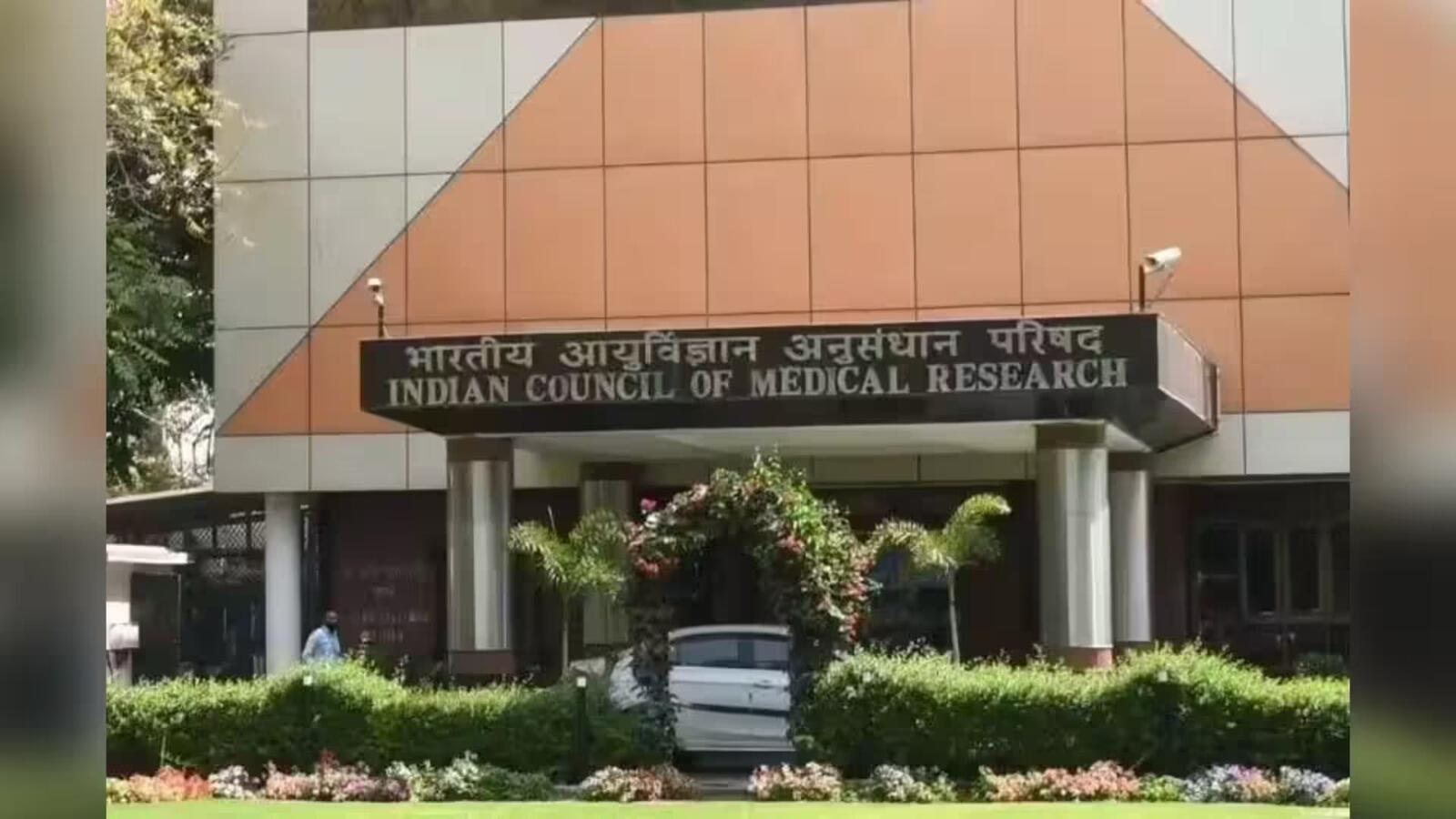
The Indian Council of Medical Research has chosen seven research centres to develop priority medical devices and diagnostic technologies. The focus is on accessible healthcare solutions and advanced medical technologies. The announcement was reported by ET HealthWorld in October 2026.
MediaNama has published its weekly roundup of the top 10 stories from October 10 to 16, 2026. The list covers the platform's most-read reporting from the week, including stories on IRDAI.

Mint compares Apple's iPhone 18 Pro Max and Samsung's Galaxy S26 Ultra across weight, storage, charging and battery. The Galaxy S26 Ultra weighs 214g, 35g lighter than the iPhone 18 Pro Max's 249g. The iPhone uses Apple's A20 Pro chip and a 6.9-inch Super Retina XDR OLED display, while Samsung's phone uses the Snapdragon 8 Elite Gen 5 for Galaxy and a built-in Privacy Display.
 Arjun’s TLDR
 Meera’s TLDR