OpenAI Slashes GPT API Pricing by Over 20% for Indian Developers — Product Growth, 24 August
The essential morning brief for Indian product builders — every number sourced and dated, every industry covered.
24 August 2026 · Product Growth Daily Brief · Presented by Arjun & Meera · Editorial standards
🎧 Listen to this edition — Arjun & Meera, 24 August 2026
Arjun & Meera · Today's brief
The fintech consolidation game just entered a new phase: Bajaj Finance's personal-loan growth has slipped below 20% for the first time as NBFCs and fintech platforms carve away market share. This matters because it's the canary in the coal mine for anyone building in lending or credit. The market isn't getting bigger—it's just redistributing, faster than incumbents can adapt. When a ₹2 lakh crore player feels the squeeze, it signals that scale alone doesn't defend territory anymore. Your distribution, unit economics, and customer stickiness do.
Watch how this plays out against three parallel shifts reshaping the stack. OpenAI just slashed GPT-5.6 Sol API pricing by over 20% to ₹380 per unit, which means the cost of AI-powered workflows—especially in fintech underwriting, fraud detection, and credit decisioning—is collapsing. Simultaneously, Flipkart is launching food delivery this month, proving that platform incumbents will layer new verticals wherever logistics and user graphs intersect. The lesson: margin compression and category sprawl are accelerating. Builders who depend on fat unit economics or niche positioning are now racing the clock.
On the flip side, capital is flowing where it smells structural advantage. Nvidia is backing Perplexity at $30 billion-plus valuation—chipmakers are investing in AI software now, recognizing that the moat lives in applied intelligence, not silicon alone. Specialist VC funds are racing into deeptech beyond traditional sectors. Even insurance is consolidating around partnerships: Generali Central Life is targeting 30-35% growth by piggybacking Central Bank's 4,500 branches. The pattern is clear: winners are bundling distribution, capital, and intelligence. Solo builders need to pick a lane—either own distribution or own irreplaceable tech, but owning neither is now a losing formula.
Watch the battery storage gap this week—renewable capacity is outpacing manufacturing by miles, signaling a multi-year infrastructure opportunity. And note Apple's Vision Pro retreat: spatial computing hype just deflated, which means AR/VR builders need to justify ROI, not dreams. By Thursday, map which of these shifts affect your growth narrative and which are distractions.
Bajaj Finance's personal-loan book remains the largest in the sector, but growth has decelerated below 20% as multiple NBFCs and fintech platforms scale rapidly. Builders targeting personal lending need to compete on underwriting speed, credit decisioning, and customer experience rather than scale alone—the market is fragmenting.
Nvidia is in discussions to invest in Perplexity's equity round at a valuation exceeding $30 billion, per ET Tech. This marks a strategic shift: chip makers are no longer content to be vendors—they're backing AI application layers to lock in long-term demand and influence product roadmap.
OpenAI has reduced GPT-5.6 Sol API pricing by over 20%, bringing per-unit cost to ₹380, while ChatGPT Pro, Plus, and Business subscription tiers remain unchanged, per Mint. SaaS builders relying on LLM APIs will see margin compression; defensibility now lies in domain verticalization, fine-tuned data, and latency optimisation—not generic LLM wrapping.
Flipkart is set to debut its food delivery service later in August 2026, leveraging its existing user base and logistics network, per Inc42. Foodtech founders should expect margin pressure—Flipkart's vertical integration (supply, logistics, payment, delivery) gives them unit-economics advantages; competitors must differentiate on cuisine curation, cloud kitchens, or hyperlocal moats.
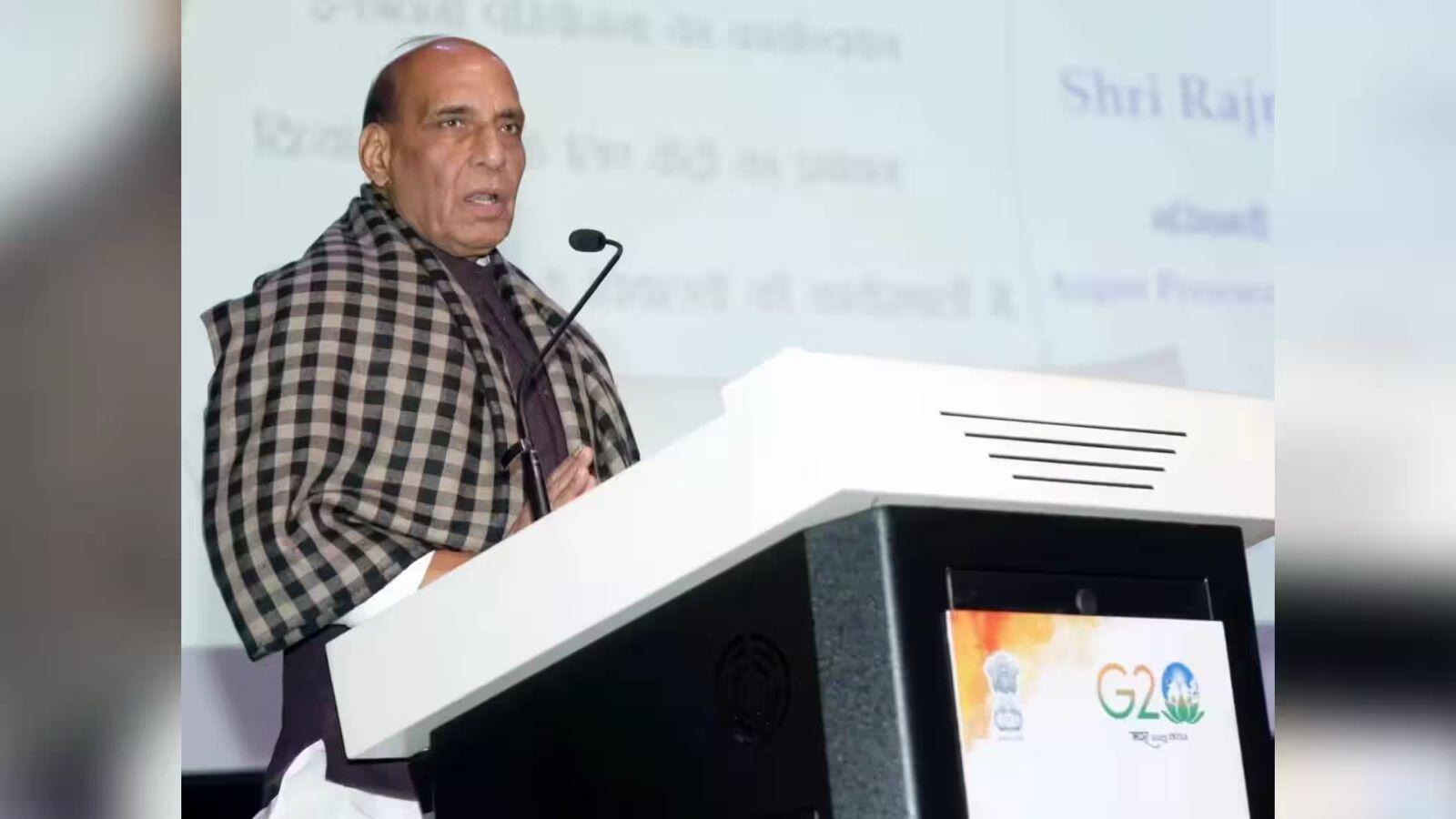
Defence Minister Rajnath Singh highlighted preventive healthcare as crucial for national economy and security, noting treating advanced diseases costs lakhs versus hundreds for early screening and basic medication, per ET HealthWorld. Healthtech founders should shift from acute care to preventive workflows—government backing signals policy support, procurement budgets, and potential subsidies for early screening and lifestyle counselling platforms.
Generali Central Life targets 30-35% new business growth after over 100% growth last year, aiming for ₹500 crore annual business leveraging Central Bank's 4,500-branch network, per ET BFSI. Insurtech builders should model bancassurance partnerships with regional and cooperative banks—agent-light, branch-powered distribution is the frontier for mid-market insurance, especially life and health products.
Specialist VC funds are broadening their investment mandate beyond traditional sectors into deeptech, per ET Tech. Deeptech founders should pitch to category specialists (climate, biotech, semiconductor funds) first—generalists are warming to the thesis, but domain VCs still have conviction and patient capital on deeper tech timelines.
Industry experts highlight a massive gap between renewable energy deployment and domestic battery cell and component manufacturing capacity, per YourStory. Energy storage builders should expect government support for cell gigafactories and supply-chain localisation—import dependence is now a strategic vulnerability, and policy is tilting towards domestic manufacturing.
Apple is largely shutting down its Vision Pro gaming team and reducing immersive video production, per ET Tech. Spatial gaming was hyped; apple's retreat signals consumer demand for headset gaming remains too early. Gaming builders should stay on mobile and console for now—VR/AR is a long-term play, not a 2026-27 revenue driver.
The SEC proposed long-awaited rules exempting certain token offerings from securities regulations, per The Hindu Tech. This reduces compliance friction for crypto companies issuing tokens and raising capital. Indian web3 builders should watch—if US regulatory momentum continues, India's crypto policy stance may shift; early-stage tokens and community fundraising become less legally risky.
 Arjun’s TLDR
 Meera’s TLDR