Simple Energy secures $180 million to dominate Indian EV two-wheeler market — Product Growth, 1 October
The essential morning brief for Indian product builders — every number sourced and dated, every industry covered.
1 October 2026 · Product Growth Daily Brief · Presented by Arjun & Meera · Editorial standards
🎧 Listen to this edition — Arjun & Meera, 1 October 2026
Arjun & Meera · Today's brief
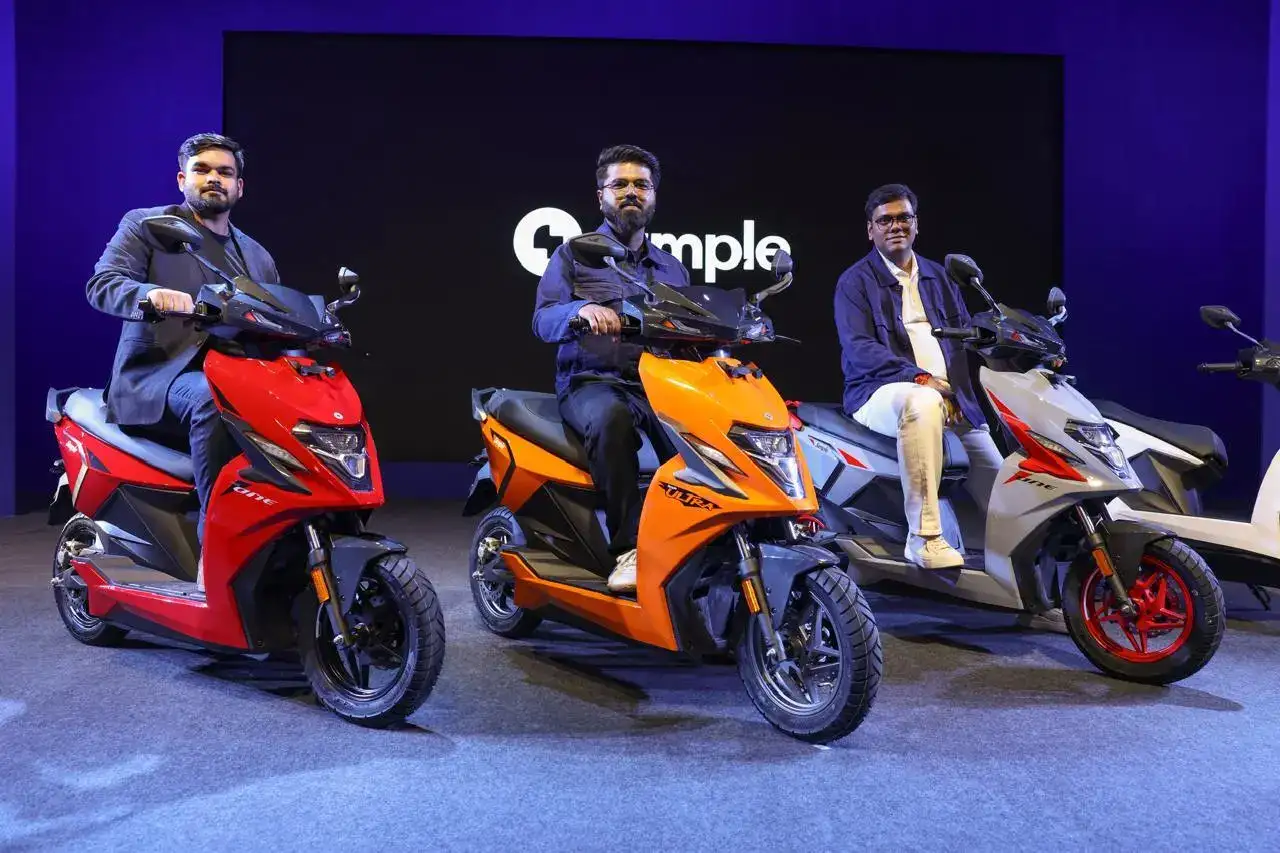
Simple Energy just raised $180 million—the third-largest funding round for an Indian EV two-wheeler maker—and the money isn't going to flashy marketing. Cofounder Shreshth Mishra was blunt about what broke last time: delivery delays and working capital constraints that choked growth despite product-market fit. This matters because it's the cleanest lesson in Indian hardware right now: capital solves operational bottlenecks before it scales ambition. Simple Energy is now racing to break into the top five, but the real story isn't the valuation—it's that execution discipline, not just product, is what separates the winners.
That urgency around operational efficiency ripples across the stack this week. PhonePe is using AI to compress manual audit workflows from four days to hours, shrinking operational overhead in real time. It's the same pattern: builders aren't hiring more; they're automating the friction. Even in healthtech, Vytalyou's pre-Series A at ₹33 crore valuation signals investor appetite for doctor-led preventive care models that work at unit economics—a shift away from burn-heavy telehealth plays that couldn't prove repeatability.
Meanwhile, the logistics layer is tightening. TPG offloaded its Shadowfax stake for ₹114 crore through a bulk deal, and the broader consolidation story is real: capital is rotating from growth-at-all-costs to profitability and market consolidation. On the flip side, D2C brands like Kapiva and Plum are now generating over 50% of growth from Tier II and III markets via Flipkart, proving that geographic arbitrage—not just metro saturation—is the next frontier. And Apple Pay landing in India with Axis Bank adds a new rails layer to fintech, though it'll take months to see if iPhone adoption translates to payment volume.
Watch how Simple Energy converts this capital into a working capital moat this quarter—and whether other hardware founders start talking about logistics and fulfillment the way they talk about product. That's where the next generation wins.
Simple Energy closed a $180 million Series C round (₹1,750 crore), its largest funding round and the third-largest for an Indian EV two-wheeler OEM, led by Thyrocare founder Dr. Arokiaswamy Velumani's family office with participation from co-founders. Energy-mobility builders should expect that large capital rounds now target working-capital de-risking and manufacturing scale, not just product development—delivery delay resolution and supply-chain efficiency are becoming investor call items.
Simple Energy cofounder Shreshth Mishra outlined how the Series C will address past delivery delays and working capital constraints that hampered growth. For EV mobility operators, the implication is clear: in a capital-intensive, inventory-heavy business, capital efficiency (cash conversion cycle) now beats product innovation as a competitive lever—startups still optimizing for feature velocity while cash bleeds will lose to disciplined capex allocation.
Private equity major TPG offloaded more Shadowfax shares through an open-market bulk transaction worth ₹114 crore. The logistics layer is consolidating; builders should assess whether logistics margin compression from competition (Shadowfax, Ecom, Delhivery) justifies building proprietary delivery networks or remaining asset-light.
Doctor-led longevity and preventive healthcare startup Vytalyou raised ₹9 crore in pre-Series A funding from Pharma Dose's Chetan Jain and Venus Industries' Ratan Jain at a ₹33 crore valuation. Healthtech builders should note that preventive care startups are raising despite macro uncertainty—the wedge is shifting from acute care (therapy) to chronic care management (prevention), attracting capital from adjacent pharma players.
Apple Pay went live in India with Axis Bank as the first partner, allowing iPhone, iPad, and Apple Watch users to make contactless payments via eligible Visa and Mastercard cards added through the Apple Wallet app. Builders should watch how Apple's wallet ecosystem competes with UPI's 22.35B April 2026 transaction volume (per NPCI) and where premium payment experiences can command a moat beyond price.
Epigamia cofounder Suneel Dasari launched Kokasa to develop electromechanical, electrohydraulic, sensing, and control systems for defence, aerospace, and space applications. Defence tech in India is attracting first-time founders from adjacent sectors (food tech → deep tech)—a signal that India's regulatory environment for defence contracting is loosening enough to attract VC-backed models, not just PSU spin-offs.
US President Donald Trump signed what he described as a constitutional framework for AI self-regulation with major tech executives, positioning industry coordination over external oversight. Builders should monitor whether this US-centric compact fragments global AI governance, creating arbitrage opportunities for companies building in India but serving international users.
PhonePe is using AI to speed up previously manual processes, shortening specific audit workflows from four days to hours and cutting operational overhead. SaaS builders should benchmark how fintech-scale operations unlock automation ROI—PhonePe's scale (as a payments giant) makes AI labor substitution obvious; smaller SaaS teams need clearer unit economics before committing engineering to workflow AI.
Brands including Kapiva, Open Secret, and Plum are driving over 50% of their growth from Tier II and III markets by leveraging real-time search trends and multi-speed delivery options on Flipkart. E-commerce operators should stop treating non-metro markets as last-mile problems; they're now growth engines that reward merchandising agility and inventory management tuned to regional preference data.
 Arjun’s TLDR
 Meera’s TLDR