The single biggest development for product builders today is Salesforce's agreement to acquire Braze for roughly $5.66 billion, with Braze Class A shareholders set to receive $47.50 per share. Customer engagement, the messaging and lifecycle layer that sits between your product and your users, is now being absorbed into a CRM giant at a serious valuation. If you run a retention or engagement stack, expect your incumbents to bundle more aggressively and your independent-tool options to narrow. It also reinforces a pattern: the platforms that own the customer relationship are consolidating adjacent capabilities rather than letting them stay independent.
Against that backdrop, the Indian story is one of deepening investment and maturing demand. CureBay raised around ₹100 Cr in a pre-Series C round to scale rural clinics and AI screening, a reminder that healthtech capital is still flowing toward distribution-heavy models that reach underserved markets, not just software-only plays. Apple India crossed ₹1 lakh crore in revenue for the first time in FY26, with revenue from operations up 31.4% to ₹1,03,853 crore and profit up 66%, which is a signal that premium hardware demand in India is no longer a niche. Lava's launch of the Aura Curve 5G at ₹23,999 with a 6,000 mAh battery and 45W charging shows the mid-range Indian handset market competing hard on battery and display rather than just price. Meanwhile, Tata Electronics, Kaynes Semicon and CG Semi are looking to Japan and the EU because domestic chip demand remains thin, a useful caution for anyone betting that local hardware demand alone will carry a deeptech roadmap.
Regulation is tightening at the edges and the lines are being drawn in new places. Karnataka says a social media ban for children falls under the Centre's domain and its Education department will seek the Centre's advice, so builders serving minors should assume a patchwork of state and national positions is coming. In insurance, NBFCs and the Federation of Indian Microfinance Companies are asking IRDAI for a phased cut to distribution commissions, a live issue for any insurtech whose unit economics rest on today's payout structure. In the US, federal bank regulators have let crypto firms keep paying interest-like rewards under new GENIUS Act rules, which will matter to anyone designing stablecoin or yield features and to those watching how Indian regulators respond to cross-border precedents. Glance's default integration on Android TVs in the US, India and Japan, through its partnership with Google, is a distribution story worth reading closely: default placement on a platform is now a strategy in its own right.
What to watch this week: track how Braze's customers and competitors react to the Salesforce deal, and whether IRDAI signals a timeline on commission reform, because both will shape your engagement and distribution assumptions for the next two quarters.
Healthtech startup CureBay raised around ₹100 Cr ($10.6 Mn) in a pre-Series C round to expand rural clinics and AI screening, per Inc42 on October 22, 2026. Rural care models with AI triage are drawing growth capital, so founders should prove clinic-level unit economics.
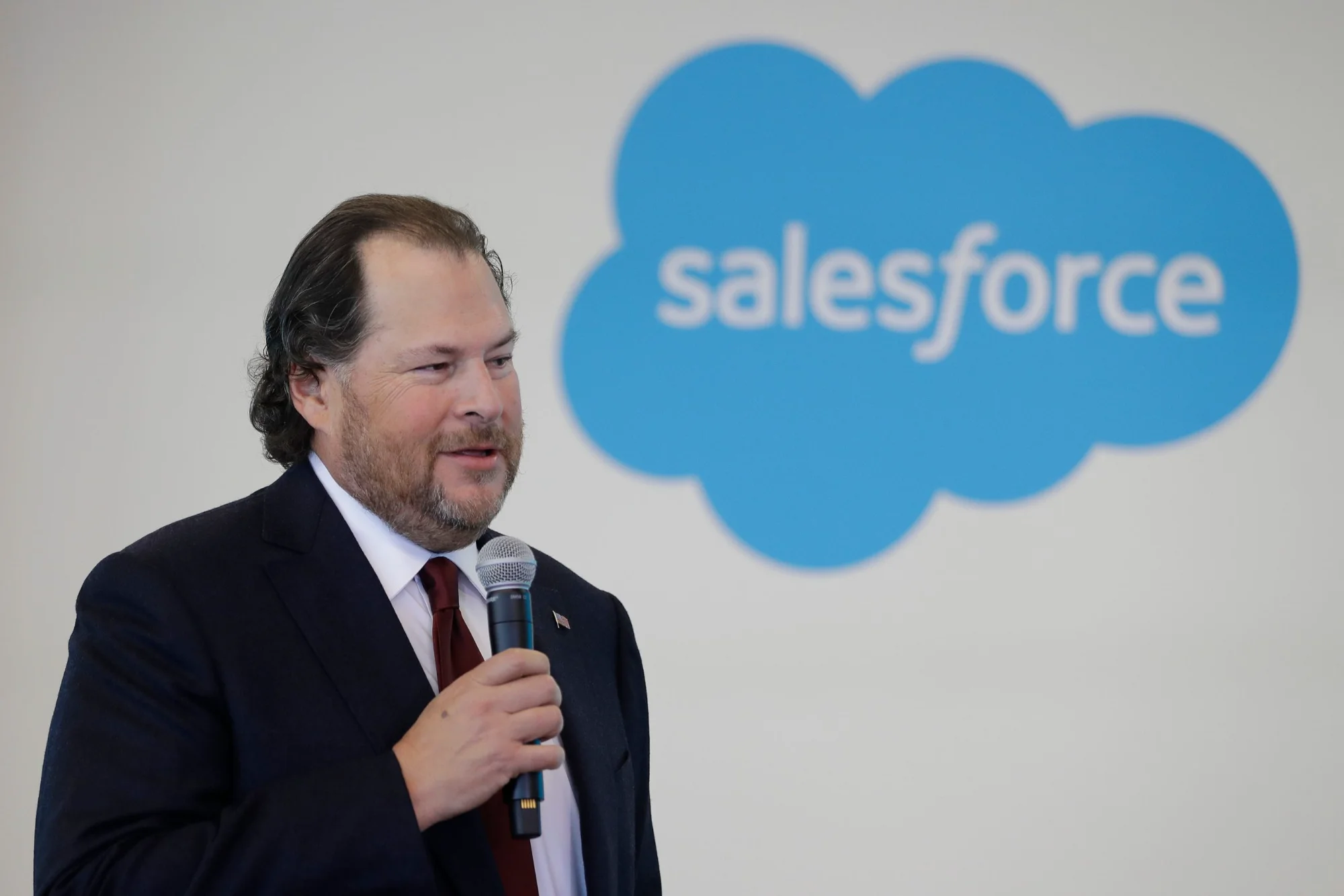
Salesforce has agreed to acquire customer engagement platform Braze for approximately $5.66 billion, with Braze Class A shareholders receiving $47.50 per share in cash. The deal will bring Braze's real-time messaging and journey management into Salesforce's Marketing Cloud, alongside its CRM, Data 360 and Agentforce platforms. The transaction is expected to close in Salesforce's FY28. Braze serves approximately 2,770 customers, including Canva, Instacart and Venmo.
Apple India crossed Rs 1 lakh crore in revenue for the first time in FY26, with revenue from operations growing 31.4% to Rs 1,03,853 crore from Rs 79,061 crore in FY25. Net profit jumped 66% year-on-year to Rs 5,311 crore. Product sales drove the growth, rising 32.7% to Rs 99,068 crore and accounting for 95.4% of operating revenue. License fees more than doubled to Rs 10,374 crore.
Karnataka says a social media ban for children falls under the Centre's domain, and its Education department will seek the Centre's advice on restricting children's access. The move comes even as the Supreme Court has raised concerns about blanket bans and age-based limits. The state's position leaves the regulatory path on youth social media access unsettled for now.
Non-bank lenders are urging IRDAI to adopt a phased approach to reducing insurance distribution commissions. The Federation of Indian Microfinance Companies (FIDC) will represent the NBFCs' case, arguing that infrastructure, manpower and credit-related costs must be recognised. Lenders warn that a sharp cut could make insurance distribution uneconomical and hurt insurance penetration. The industry wants a glide path similar to the one proposed for insurers on Expense of Management.
Tata Electronics, Kaynes Semicon and CG Semi are pursuing overseas customers in Japan and the EU as domestic semiconductor demand remains limited, per Mint on October 22, 2026. Hardware founders should treat export customers as a near-term requirement, not an option.
Lava launched the Aura Curve 5G at ₹23,999, featuring a 6,000 mAh battery with up to 45W charging and a 33W charger in the box. The 6.67-inch FHD+ curved AMOLED display has a 120 Hz refresh rate and 1,100 nits peak brightness. It runs on MediaTek Dimensity 7100 with 6 GB RAM and 128 GB storage, and a 50 MP Sony IMX752 main camera. The phone is available through Lava's offline retail network across India.
Glance will be integrated by default on Android TVs in the US, India and Japan through a partnership with Google. The collaboration will turn idle TV screens into interactive shoppable storefronts across fashion, travel, food, wellness and other lifestyle categories.
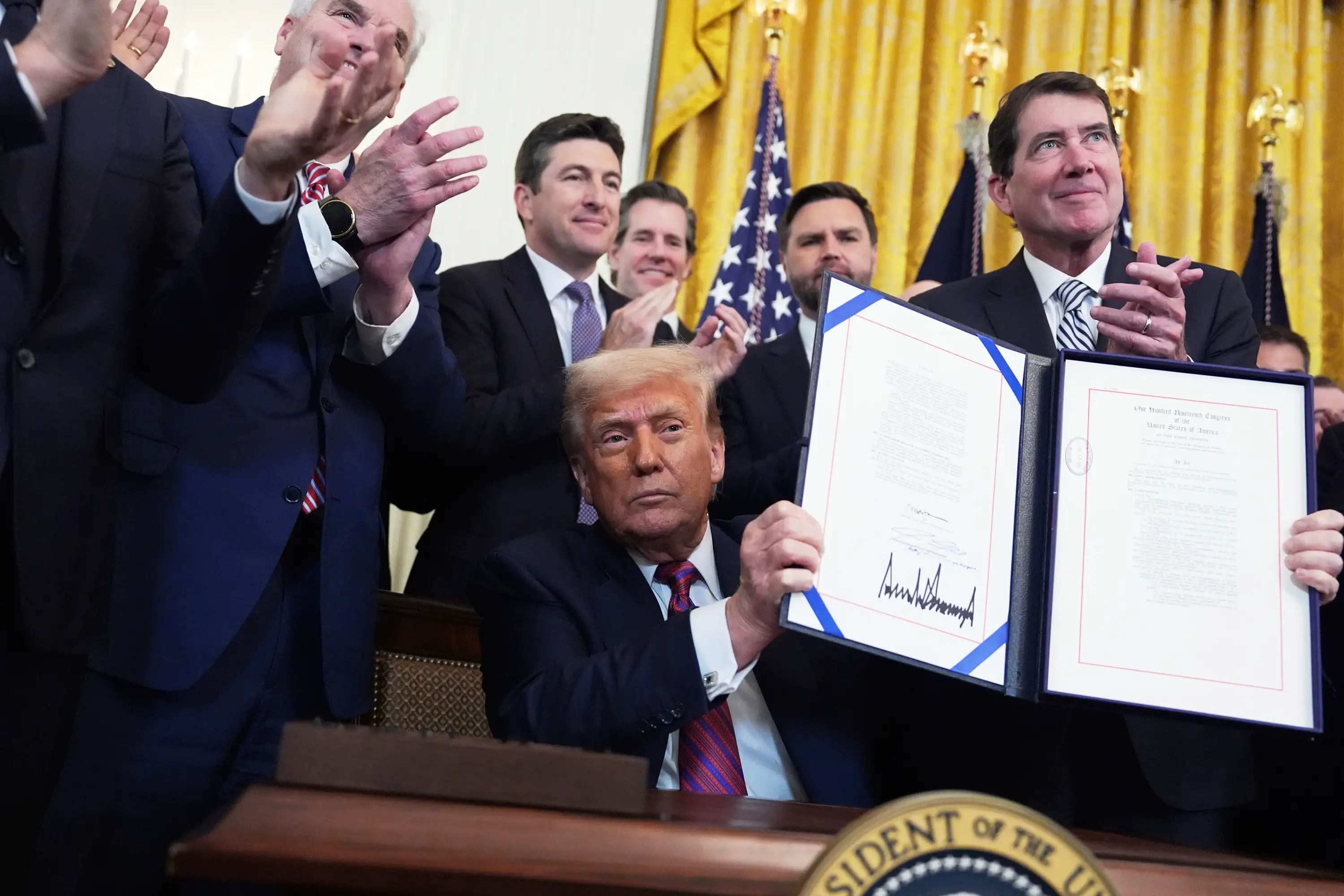
Federal bank regulators say cryptocurrency companies can keep paying interest-like rewards under new rules implementing the GENIUS Act. The GENIUS Act was signed into law last year to codify rules for stablecoin issuers.

 Arjun’s TLDR
 Meera’s TLDR